



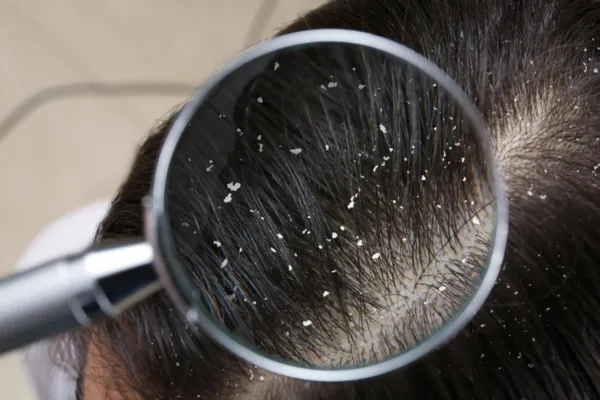
Dandruff is not just an itchy inconvenience, when severe, it can affect your scalp’s health and potentially jeopardize hair growth. In this article, we’ll explore how dandruff impacts hair follicles, why certain underlying conditions matter, and how you can protect your hair from unnecessary damage.
Dandruff’s cause and when it gets severe
Dandruff, the flaking of scalp skin, is often driven by the overgrowth of the fungus Malassezia, which thrives on sebum. This overgrowth triggers inflammation and accelerates skin cell turnover, resulting in visible flakes. While dandruff is widespread, affecting about half of adults globally, severe cases can lead to scalp irritation, greasiness, redness, and persistent flaking and these symptoms may pose real risks to your hair follicles.
How Severe Dandruff Harms Hair Follicles
Inflammation and Follicle Stress
Chronic inflammation, spurred by Malassezia and the body’s immune response, weakens hair follicles, possibly leading to thinning or slowed hair growth.
Trauma from Scratching
Itching often leads to intense scratching, which can damage scalp skin and hair follicles. Repeated trauma may result in follicle scarring, which impedes hair regrowth and causes thinning.
Oxidative Stress and Microbial Imbalance
Inflammation and microbial dysbiosis (notably the overabundance of Malassezia) can trigger oxidative stress, further damaging follicles. Dysregulated scalp microbiomes are increasingly linked to hair loss.
Reduced Follicular Anchoring
Observational studies indicate that severe dandruff and related conditions can weaken hair anchoring by increasing catagen/telogen phase hairs and dysplastic anagen hairs—showing disrupted follicle structure and function.
Underlying Conditions That link Dandruff to Hair Loss
Often, dandruff is a symptom and not the root cause of underlying scalp disorders that directly affect hair health:
- Seborrheic Dermatitis: An inflammatory condition that can damage hair follicles if left untreated.
- Psoriasis: Presents with scaly patches; hair may not grow in affected areas.
- Fungal Infections (e.g., ringworm): Cause clumping hair loss accompanied by flaking.
- Other inflammatory disorders (like lichen planopilaris or folliculitis decalvans) can mimic dandruff while directly destroying follicles.
What You Can Do: Prevention & Restoration
Diagnose the Underlying Cause
See a dermatologist if dandruff is persistent or hair is thinning especially if over-the-counter treatments fail.
Treat Medically
Use medicated shampoos with antifungal or anti-inflammatory agents (e.g., ketoconazole, zinc pyrithione, selenium sulfide, salicylic acid) to alleviate dandruff and protect follicles.
Avoid Scratching and Aggravation
Gentle care is key, avoid aggressive scratching, tight hairstyles, or irritating products that exacerbate follicle damage.
Exfoliate the Scalp (Carefully)
For those with mild dandruff, gentle exfoliation (physical or chemical, such as salicylic acid) can clear clogged follicles and improve scalp health; note: avoid this if you have sensitive scalp conditions like psoriasis.
Calm Inflammation and Restore Microbial Balance
Some advanced treatments (still under research) target scalp microbiome restoration and inflammation reduction to support follicle health.
Support Regrowth Post-Treatment
Once the scalp is clear and irritation stops, hair often regrows. In cases of weakened follicles, regrowth products like minoxidil may help, but only if follicles remain viable.
Severe Dandruff Issues, follicle damage and mitigation
| Severe Dandruff Issue | Follicle Damage Mechanism | Mitigation Strategy |
| Inflammation (via Malassezia) | Weakens follicles, leads to thinning | Antifungal/anti-inflammatory treatments |
| Scratching & Physical Trauma | Causes scarring and potential permanent loss | Gentle care, avoid aggravation |
| Microbial Imbalance & Oxidation | Damages follicles, disrupts scalp health | Scalp microbiome-friendly care, exfoliation |
| Underlying Scalp Conditions | Directly harm hair follicles | Diagnosis and targeted treatment |
Bottom line
Severe dandruff doesn’t merely cause itchiness but can initiate a chain reaction of inflammation, infection, and physical trauma that harms hair follicles. Addressing the root cause, treating underlying conditions, and maintaining gentle scalp care improves your odds of keeping follicles healthy and your hair, too.
For further information read our blog on how to treat dandruff.
Sources:
https://en.wikipedia.org/wiki/Dandruff
https://pmc.ncbi.nlm.nih.gov/articles/PMC6369642
At Capilclinic, we’re trusted by thousands of patients in the UK and Europe as a leading Hair Transplant Clinic in Turkey and Spain, known for our expert doctors, advanced facilities, natural hairline results, and affordable all-inclusive packages. Reach out to our team today to start your transformation.