



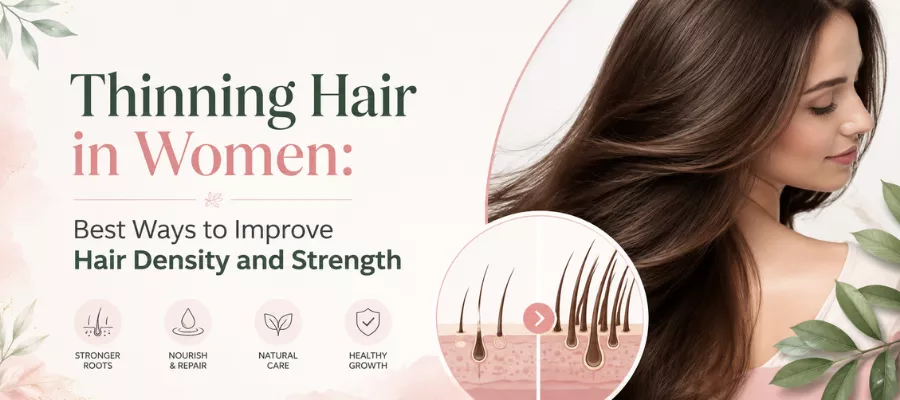
Thinning hair in women is more common than many people realize, and it can happen at almost any stage of adult life. Hormonal changes, stress, genetics, nutritional deficiencies, styling habits, and certain health conditions can all contribute to thinning hair in women. For some women, the change develops slowly around the part line or crown. For others, increased shedding appears suddenly when washing or brushing the hair. Understanding why the hair is becoming thinner is an important first step because the most effective approach depends heavily on the underlying cause.
Improving thinning hair in women usually requires more than changing a shampoo or adding a single supplement. Hair growth follows a biological cycle, which means visible improvement takes time and consistency. A combination of scalp care, balanced nutrition, gentle styling, appropriate treatments, and professional evaluation when necessary can create better conditions for stronger, fuller-looking hair. The goal is not simply to make hair appear thicker temporarily but to support healthier growth while protecting the strands that are already present.
| Common Sign | What It May Look Like | Why It Matters |
|---|---|---|
| Wider part line | More scalp becomes visible along the part | Can be associated with progressive female pattern thinning |
| Increased shedding | More hair appears in the shower, brush, or pillow | May occur after stress, illness, hormonal changes, or nutritional problems |
| Reduced ponytail volume | The ponytail feels noticeably smaller | May indicate gradual loss of overall density |
| Fragile strands | Hair breaks before reaching its usual length | Often linked to heat, chemicals, dryness, or mechanical damage |
| Crown thinning | Scalp becomes easier to see on the top of the head | A common pattern in women experiencing progressive thinning |
Thinning Hair in Women: Understanding Why Hair Becomes Thinner
There is rarely one universal explanation for thinning hair in women. Genetics can influence how sensitive hair follicles are to hormonal changes, while pregnancy, menopause, major weight changes, prolonged stress, illness, and some medications may disturb the normal hair cycle. Iron deficiency, inadequate protein intake, thyroid problems, and other nutritional or medical factors may also contribute. In addition, frequently bleaching, straightening, tightly pulling, or overheating the hair can make existing thinning look considerably worse because damaged strands break more easily.
The location and timing of hair loss can provide useful clues. Gradual thinning around the crown and part line often looks different from temporary shedding that occurs several months after a stressful event. Hair that breaks halfway down the strand also requires a different approach from hair that is falling directly from the root. Because thinning hair in women can have several overlapping causes, paying attention to patterns rather than focusing only on the amount of hair being lost can make it easier to choose an effective strategy.
| Possible Factor | Typical Pattern | Useful Next Step |
|---|---|---|
| Genetics | Slowly widening part or reduced crown density | Discuss long-term management options with a dermatologist |
| Stress or illness | Noticeable shedding several weeks or months later | Focus on recovery while monitoring whether shedding settles |
| Nutritional deficiency | Diffuse thinning, sometimes with fatigue or brittle nails | Consider professional evaluation and appropriate blood tests |
| Hormonal changes | Gradual or sudden changes in density | Speak with a healthcare professional if symptoms persist |
| Styling damage | Breakage, dryness, uneven lengths | Reduce heat, chemicals, and mechanical tension |
Thinning Hair in Women: What Are the Most Effective Ways to Improve It?
No single routine works for every case of thinning hair in women, but several habits can support healthier follicles and reduce unnecessary damage. The most useful approach is usually one that combines scalp health, appropriate nutrition, gentle hair care, and evidence-based treatment when indicated.
- Identify the cause first. Persistent, sudden, or unexplained thinning should be assessed rather than treated only as a cosmetic issue.
- Eat enough protein and nutrient-rich foods. Hair is largely made from keratin, a protein, so severely restrictive diets may affect normal growth.
- Keep the scalp clean and comfortable. Regular cleansing removes excess oil, styling products, and buildup without requiring aggressive scrubbing.
- Reduce excessive heat. Frequent straightening, curling, and high-temperature blow-drying can increase breakage and make thin areas more noticeable.
- Avoid constant tension. Tight ponytails, extensions, braids, and buns may repeatedly pull on vulnerable follicles.
- Use treatments consistently. Hair growth changes are gradual, so frequently switching products may make it difficult to judge whether a routine is helping.
- Consider professional guidance. A dermatologist can help determine whether medical treatment, laboratory testing, or another approach is appropriate.
Thinning Hair in Women: How Nutrition Influences Hair Growth
Nutrition has an important relationship with thinning hair in women, but taking large amounts of random vitamins is not necessarily the answer. Hair follicles are metabolically active and require adequate energy, protein, iron, zinc, essential fatty acids, and several vitamins to function normally. Extremely low-calorie diets, rapid weight loss, or diets that consistently lack protein may interrupt the normal growth cycle. Iron status can also be particularly relevant for some women, especially when heavy menstrual bleeding or restrictive eating patterns are present.
A balanced diet built around protein-rich foods, vegetables, fruit, whole grains, healthy fats, and appropriate sources of iron is generally a more sensible foundation than relying entirely on supplements. Supplements should ideally address an actual need rather than be taken simply because they are marketed for hair. When thinning hair in women occurs alongside fatigue, unexplained weight changes, irregular periods, or other physical symptoms, professional assessment may be more useful than experimenting with multiple hair vitamins.
Thinning Hair in Women: Why Scalp Health Should Not Be Ignored
Healthy-looking hair begins at the scalp, yet scalp care is often overlooked when addressing thinning hair in women. Excess oil, heavy product buildup, persistent flaking, or scalp irritation can make hair difficult to manage and may create an environment that is less comfortable for healthy growth. Washing frequency should therefore be based on scalp needs rather than myths suggesting that washing hair frequently automatically causes hair loss. Hair seen during washing is often hair that has already completed its shedding phase.
Scalp massage can also be incorporated into a routine because it encourages gentle stimulation and can make scalp care more relaxing. However, aggressive rubbing, scratching with fingernails, or applying concentrated essential oils directly to the skin can cause irritation. When dandruff, redness, itching, soreness, or scaling accompanies thinning hair in women, treating the scalp condition itself may be an important part of improving the overall appearance and health of the hair.
Thinning Hair in Women: Which Daily Habits Can Make Thinning Worse?
Some everyday habits do not directly cause permanent hair loss on their own, but they can increase breakage, weaken already fragile strands, or place unnecessary tension on the follicles. For women who already have reduced density, preventing this additional damage can make a noticeable difference in how full the hair appears.
- Wearing extremely tight ponytails, buns, braids, or extensions every day
- Using flat irons or curling tools at very high temperatures without heat protection
- Brushing aggressively when the hair is wet and vulnerable
- Bleaching or chemically processing damaged hair too frequently
- Rubbing wet hair roughly with a towel
- Following crash diets or consistently eating too little protein
- Applying irritating products directly to the scalp without testing them first
- Ignoring sudden or rapidly progressing hair loss for long periods
Thinning Hair in Women: Choosing the Right Shampoo and Hair-Care Products
Shampoo cannot usually reverse the underlying biological causes of thinning hair in women, but the right products can help the hair look fuller while reducing unnecessary breakage. Lightweight volumizing formulas can prevent fine hair from becoming flat or weighed down, while gentle cleansing can keep the scalp fresh without leaving the lengths excessively dry. Conditioner remains useful, particularly on mid-lengths and ends, because hair that breaks easily can appear even thinner over time.
Products containing heavy oils or rich butters are not automatically bad, but they may make very fine hair look flatter if applied too close to the roots. Conversely, constantly using harsh clarifying shampoos can leave the hair dry and difficult to manage. The best routine for thinning hair in women usually creates balance: a clean scalp, manageable lengths, minimal irritation, and as little mechanical damage as possible during washing and styling.
Thinning Hair in Women: Can Stress Really Cause Hair Shedding?
Stress can play a meaningful role in thinning hair in women, particularly when the body experiences significant physical or emotional strain. Major illness, surgery, intense psychological stress, rapid weight loss, or other disruptions may cause a larger percentage of hairs to move into the resting phase of the growth cycle. The shedding often becomes noticeable later rather than immediately, which is why women may not always connect the hair change to an earlier event.
Stress-related shedding can improve when the trigger resolves, although hair does not return to its previous appearance overnight. The growth cycle takes time to normalize. Regular sleep, sufficient nutrition, physical activity, and realistic stress-management strategies may support overall wellbeing during this period. If shedding remains heavy, continues for months, or is accompanied by clearly defined bald patches, professional evaluation is advisable because stress may not be the only factor involved.
Thinning Hair in Women: When Professional Treatment May Be Helpful
Persistent thinning hair in women deserves medical attention when it is progressing, appearing suddenly, or affecting clearly defined areas of the scalp. A dermatologist can examine the pattern of hair loss, review family history and recent health changes, assess the scalp, and determine whether laboratory testing is appropriate. Depending on the cause, professional care may include topical treatments, prescription approaches, correction of nutritional deficiencies, or procedures designed to support hair density.
Early evaluation can be particularly valuable because some types of hair thinning respond better when addressed before significant density has been lost. Professional treatment should also be individualized. A product or procedure that helps one woman may not be appropriate for another because thinning hair in women can result from very different biological mechanisms. A personalized treatment plan is therefore usually more useful than following every viral hair-growth recommendation at the same time.
Thinning Hair in Women: How Long Does It Take to See Improvement?
Hair grows slowly, so changes in thinning hair in women should generally be evaluated over months rather than days. Even when the underlying problem has been corrected, new growth needs time to emerge from the scalp and become long enough to affect overall density. This is one reason people sometimes abandon useful routines too quickly. Constantly changing shampoos, supplements, or treatments every few weeks can make it difficult to understand what is actually working.
Photographs taken in similar lighting and from the same angle can provide a more reliable way to monitor changes than checking the mirror several times a day. It is also useful to watch for reduced shedding, short new hairs, improved scalp coverage, and better strand strength rather than expecting dramatic overnight growth. Consistency and realistic expectations are central to managing thinning hair in women effectively.
Thinning Hair in Women: Frequently Asked Questions
Thinning Hair in Women: Can Hair Become Thick Again?
In many cases, the appearance of thinning hair in women can improve, but the potential for regrowth depends on why the thinning occurred and whether the follicles remain capable of producing healthy hair. Temporary shedding caused by stress, nutritional problems, or certain hormonal changes may improve when the trigger is corrected. Progressive hereditary thinning may require ongoing management to preserve density and encourage the best possible growth.
The earlier the cause is identified, the easier it may be to prevent unnecessary progression. Improvement may involve reducing shedding, increasing the number of actively growing hairs, preventing breakage, or making existing strands healthier. For this reason, “thicker hair” does not always mean creating entirely new follicles; it can also mean protecting and maximizing the follicles that are already functioning.
Thinning Hair in Women: Should Hair Be Washed Less Often?
Washing less frequently does not automatically improve thinning hair in women. Hair that comes out during shampooing is often already in the shedding phase and would have fallen out during brushing or daily movement anyway. Leaving the scalp unwashed for too long may actually create excess oil and buildup for some people.
The ideal washing schedule depends on scalp oil production, hair texture, exercise, styling products, and personal comfort. Someone with an oily scalp may need to wash more frequently than someone with very dry or tightly curled hair. A gentle technique is generally more important than following a strict number of wash days.
Thinning Hair in Women: Does Cutting Hair Make It Grow Faster?
Cutting the ends does not change the speed at which hair grows from the follicle, so regular trims do not directly treat thinning hair in women. However, removing split and severely damaged ends can reduce breakage and help the hair look healthier, denser, and more even.
A shorter or strategically layered haircut may also make fine hair appear fuller because long, thin lengths can sometimes emphasize reduced density. The cosmetic improvement can be significant even though the haircut itself does not affect follicle activity.
Thinning Hair in Women: When Should You See a Dermatologist?
A dermatologist should be considered when thinning hair in women develops suddenly, progresses rapidly, creates visible bald patches, causes scalp discomfort, or continues without an obvious explanation. Professional evaluation is also appropriate when thinning occurs together with symptoms such as unusual fatigue, menstrual changes, unexplained weight changes, or other signs that may point to an underlying health issue.
Women do not need to wait until hair loss becomes severe before seeking help. Earlier assessment can make it easier to identify the pattern, rule out contributing factors, and establish a realistic plan. Because successful management of thinning hair in women depends heavily on the cause, obtaining the correct diagnosis can be one of the most valuable steps toward improving long-term hair density.