



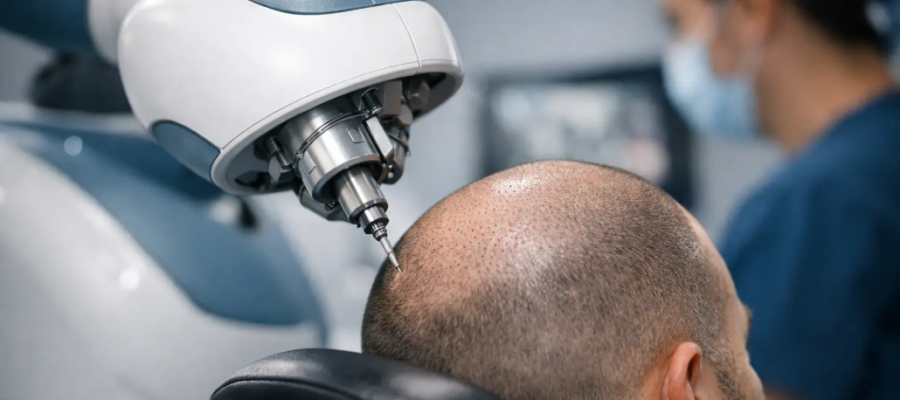
Robotic hair transplant technology is often described as a major innovation in hair restoration. If you are researching treatment options, you may have seen claims about robots offering greater precision, faster procedures, or improved results. It’s understandable to feel curious, but also unsure about what this technology actually does and whether it is right for you.
This guide explains what robotic hair transplant technology is, how it is used in practice, what its potential benefits and limitations are, and how to think about it in a medically grounded way.
What Is Robotic Hair Transplant Technology?
Robotic hair transplant systems are computer-assisted devices designed to support parts of the hair transplant process, most commonly follicular unit extraction (FUE).
In simple terms, the robot:
- Uses imaging and software to identify individual hair follicles
- Assists with extracting grafts from the donor area
- Aims to improve consistency during harvesting
Robotic systems do not replace the surgeon. They are tools used under direct medical supervision. To understand where robotic systems sit alongside other modern innovations, it can help to explore recent advancements in hair restoration techniques and how different approaches are selected.
How Robotic Hair Transplants Work
Scalp Imaging and Mapping
The donor area is scanned using high-resolution imaging. This allows the system to:
- Analyse follicle direction and angle
- Estimate hair density
- Support structured extraction planning
This mapping helps reduce uneven harvesting when used correctly.
Assisted Graft Extraction
During extraction, the robotic system:
- Aligns with the natural follicle angle
- Creates controlled micro-incisions
- Selects grafts based on predefined criteria
A trained medical professional monitors and adjusts the process throughout the procedure.
Human-Led Hairline Design and Placement
Despite automation during extraction:
- Hairline design is always performed by the surgeon
- Graft placement in the recipient area is done manually
- Artistic judgment determines angle, density, and direction
This human element remains essential for natural-looking results.
What Are the Potential Benefits of Robotic Hair Transplants?
Robotic assistance may offer advantages in specific cases.
Improved Consistency During Extraction
Robotic systems can help:
- Maintain consistent punch depth
- Reduce variation during long procedures
- Support even donor-area harvesting
This can help preserve donor appearance when used appropriately.
Reduced Physical Fatigue in Long Procedures
Hair transplants can take many hours. Robotic assistance may:
- Reduce repetitive strain
- Support consistency later in the procedure
This can be useful in higher graft count cases.
Data-Guided Donor Management
The imaging software provides:
- Better visualisation of donor density
- Real-time feedback during extraction
- More structured harvesting patterns
These features support informed surgical decisions.
What Robotic Technology Does Not Do
It is important to understand limitations.
Robotic systems:
- Do not design a natural hairline
- Do not determine how many grafts you need
- Do not place grafts artistically
- Do not guarantee better results
The real benefits of a well-planned hair transplant come from correct diagnosis, planning, and execution. Technology supports this process but does not replace it. Understanding what results a hair transplant can realistically offer helps keep expectations grounded.
Is Robotic Hair Transplant Technology Better Than Manual FUE?
Not necessarily. Both robotic-assisted and manual FUE can deliver excellent outcomes when performed well.
Manual FUE offers:
- Greater flexibility with different hair types
- Better adaptability for curly or afro-textured hair
- Immediate tactile feedback for the surgeon
Robotic assistance may be more suitable for:
- Straight or mildly wavy hair
- Uniform donor areas
- Clinics with extensive experience using the technology
To better understand this difference, it helps to know whether your hair type suits robotic or manual FUE.
Who May Be a Suitable Candidate for Robotic Hair Transplants?
Robotic-assisted FUE may be considered for people who:
- Have straight or mildly wavy hair
- Have good donor density
- Are suitable candidates for standard FUE
It may be less appropriate for:
- Very curly or tightly coiled hair
- Scarred donor areas
- Highly variable follicle angles
A medical consultation helps determine suitability. Learning how doctors assess whether someone is a good candidate for a hair transplant provides clarity beyond the technology itself.
Common Misconceptions About Robotic Hair Transplants
“The Robot Does the Whole Surgery”
The robot assists with extraction only. Human expertise guides planning, supervision, and placement.
“Robotic Means No Risk”
All medical procedures carry variability. Technology reduces certain risks but does not eliminate them.
“Robotic Transplants Always Look More Natural”
Natural appearance depends on hairline design and placement, not extraction method alone.
How Clinics Decide Whether to Use Robotic Technology
Responsible clinics evaluate:
- Hair type and donor characteristics
- Complexity of the case
- Surgeon experience with the system
- Whether robotic assistance adds real value
Technology should be chosen because it benefits the patient, not because it sounds impressive.
Clinics like Capilclinic, which work with many international patients from the UK and Europe, focus on selecting techniques based on individual suitability rather than promoting a single approach for everyone.
Recovery and Aftercare Still Matter
Even with robotic assistance, recovery and results depend on how well the scalp heals.
Following the right aftercare steps after a hair transplant remains essential to protect grafts and support healthy regrowth.
Robotic Hair Transplant Turkey Cost 2026
Robotic hair transplant in Turkey in 2026 typically costs between $3,000 and $6,000, with an average price around $4,000–$4,500 depending on the clinic, surgeon experience, and number of grafts required.
Robotic hair transplant uses advanced robotic systems to assist in precise follicle extraction and implantation, ensuring high accuracy, minimal trauma, and natural hair growth patterns. This technology is especially beneficial for patients seeking uniform density and reduced healing time.
Final Thoughts
Robotic hair transplant technology is a valuable tool in modern hair restoration, but it is not a standalone solution. Its effectiveness depends on correct patient selection, experienced medical oversight, and thoughtful integration into a broader treatment plan.
The most important factors remain accurate diagnosis, realistic expectations, and skilled surgical planning.
If you are exploring robotic hair transplant technology and want to understand whether it is appropriate for your situation, the medical team at Capilclinic can review your hair characteristics and guide you through the safest and most suitable options.
Medical Disclaimer: This article is for informational purposes only and does not replace professional medical advice, diagnosis, or treatment. Hair transplant techniques and outcomes vary between individuals. Always seek evaluation from a qualified medical professional before undergoing any procedure.