



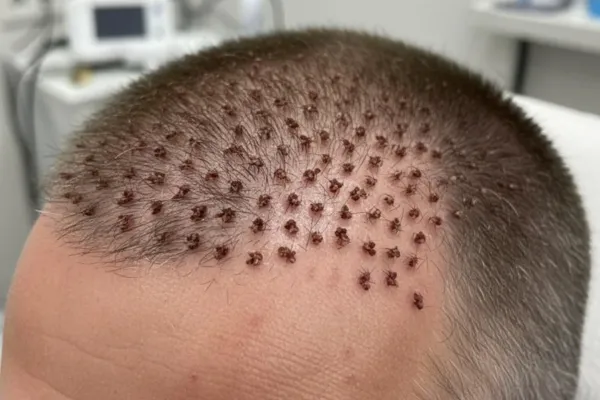
Scabs are a normal and expected part of healing after a hair transplant. Still, seeing crusts on your scalp can feel uncomfortable or worrying, especially if you’re unsure how to care for them safely. Many patients ask whether scabs should be removed, how long they last, and whether they can affect final results.
This guide explains why scabs form, how to treat them properly, what to avoid, and when it’s sensible to speak to a medical professional.
Why Do Scabs Form After a Hair Transplant?
During a hair transplant, tiny incisions are made in the scalp to place grafts. As the skin heals, small scabs form from dried blood, plasma, and healing tissue.
Scabs are most commonly seen:
- Around transplanted grafts in the recipient area
- Occasionally in the donor area where follicles were removed
Their purpose is protective. Scabs help seal the skin while newly implanted follicles anchor into place.
Is It Normal to Have Scabs After a Hair Transplant?
Yes. Scab formation is completely normal and expected in the early healing phase.
In most patients:
- Scabs appear within 24 to 72 hours
- They gradually dry and loosen
- They fall off naturally within 7 to 14 days
Healing speed varies depending on skin type, circulation, and aftercare.
The Best Way to Treat Scabs Safely
Follow Your Clinic’s Washing Instructions
Gentle washing is the most important step in scab care.
General guidance usually includes:
- Begin washing when advised, often from day 2 or 3
- Use a mild, non-medicated shampoo
- Use lukewarm water
- Pour water gently over the scalp rather than using pressure
This approach softens scabs gradually without disturbing grafts. Understanding proper aftercare during the early healing phase helps place scab care in the wider recovery process.
Keep the Scalp Lightly Moist (If Advised)
Some clinics recommend:
- Saline sprays
- Gentle moisturising foams or lotions
These can prevent scabs from becoming overly dry or hard. Only use products approved by your medical team.
Let Scabs Fall Off Naturally
This is essential for protecting grafts.
- Do not pick, scratch, or rub scabs
- Do not try to speed up removal
- Forced scab removal can dislodge grafts
Scabs will shed on their own once the skin underneath has healed.
What to Avoid While Scabs Are Present
To reduce irritation and complications, avoid:
- Scratching the scalp
- Using fingernails, combs, or brushes on scabs
- Applying oils or home remedies without approval
- Using hot water or hair dryers
- Wearing tight hats that rub against grafts
These actions can slow healing and increase the risk of infection.
When Should Scabs Be Gone?
For most patients:
- Scabs start loosening around day 7
- Most are gone by day 10 to 14
If scabs persist beyond two weeks, feel painful, or look inflamed, professional advice is recommended.
Can Scabs Affect Hair Growth?
Scabs themselves do not harm hair follicles when managed correctly. Problems usually arise only if:
- Scabs are removed too early
- Infection develops
- Excessive inflammation occurs
Gentle care protects graft survival and long-term results.
Signs You Should Speak to a Specialist
Seek medical advice if you notice:
Increasing redness, pain, or swelling
Yellow discharge, pus, or a strong smell
Fever or feeling unwell
Thick scabs that remain painful after two weeks
These symptoms may indicate delayed healing or infection. Learning how to tell whether healing signs are normal or concerning can help you decide when reassurance is enough and when medical review is needed.
Clinics like Capilclinic, which support many international patients from the UK and Europe, regularly guide patients through this stage of recovery and help distinguish normal scabbing from problems that need treatment.
Common Myths About Scabs After a Hair Transplant
“Removing scabs faster improves results”
Early removal can damage grafts and delay healing.
“Scabs mean the transplant has failed”
Scabs are a normal sign of healing, not failure.
“More scabs mean better growth”
Scab thickness varies between individuals and does not predict results.
Final Thoughts
Scabs after a hair transplant are a normal part of recovery and usually resolve on their own with gentle care. The best treatment is patience, proper washing, and avoiding unnecessary interference.
If you’re unsure whether your scabs are healing normally or feel concerned at any stage, the medical team at Capilclinic can review your recovery and guide you on safe next steps.
Medical Disclaimer: This article is for informational purposes only and does not replace professional medical advice, diagnosis, or treatment. Healing responses vary between individuals. Always follow the guidance provided by your treating medical professional and seek evaluation for concerning symptoms.
At Capilclinic, we’re trusted by thousands of patients in the UK and Europe as a leading Hair Transplant Clinic in Turkey and Spain, known for our expert doctors, advanced facilities, natural hairline results, and affordable all-inclusive packages. Reach out to our team today to start your transformation.