



Are you tired of looking in the mirror and seeing a receding hairline or thinning crown? You’re not alone. Millions of men and women around the world struggle with the frustrating reality of hair loss. But what if I told you there’s a revolutionary new treatment on the horizon that could change all that? The answer is in stem cells and baldness.
That’s right. The same incredible cells that can regenerate damaged tissues and organs may hold the key to restoring a full, healthy head of hair. Thanks to stem cells and baldness, you can say goodbye to your days of struggling with thinning hair and hello to a vibrant, youthful mane.
How do stem cells and baldness work?
At the heart of this promising new frontier in hair restoration is the incredible power of stem cells. These unique cells, found throughout the body, can develop into different cell types. In the case of hair loss, scientists have discovered that stem cells play a crucial role in the growth and regeneration of hair follicles.
Here’s a quick breakdown of how it works: Each hair follicle contains its reservoir of stem cells. These stem cells fuel the cyclical growth of our hair, allowing it to renew itself continuously. However, in people suffering from pattern baldness or other hair loss, these stem cells become depleted or dysfunctional, leading to a diminished ability to produce new hair.
What are the causes of Baldness?
Baldness, scientifically referred to as alopecia, is a complex condition with many contributing factors that can manifest differently from person to person. To gain a more comprehensive understanding, let’s delve into the common causes of baldness in greater detail:
Genetics
One of the most prominent determinants of baldness is genetics. If baldness runs in your family, your chances of experiencing it are significantly higher. The inheritance of specific genes can predispose individuals to hair loss, making it a hereditary concern.
Aging and natural hair changes
As individuals age, it’s natural for hair growth to slow down, and the hair may progressively become thinner. Age-related hair loss is common in both men and women and is often referred to as male and female pattern baldness.
Medical condition
Certain medical conditions can trigger hair loss. Conditions such as thyroid disorders, autoimmune diseases, and alopecia areata can disrupt the hair growth phases and result in hair loss.
Hormonal fluctuations and DHT
Hormonal imbalances, particularly the hormone dihydrotestosterone (DHT), are key players in hair loss. Conditions like androgenetic alopecia are often characterized by elevated DHT levels, which can lead to hair thinning and eventual baldness.
Nutritional deficiencies
Proper nutrition is vital for healthy hair. Insufficient intake of essential nutrients, notably iron and protein, can weaken hair structure and eventually lead to hair loss. A balanced diet is crucial for maintaining hair health.
Stress and its influence
High levels of stress can have a profound impact on the hair growth cycle. Stress-related hair loss, also known as telogen effluvium, is characterized by a disruption in the normal hair growth phases, leading to excessive shedding and hair thinning.
Medications
While serving essential medical purposes, some medications may have hair loss as an unintended side effect. Chemotherapy drugs, blood thinners, antidepressants, and various other pharmaceuticals can lead to hair loss, affecting individuals undergoing such treatments.
Hairstyles and hair treatments
Hair Care practices and styling choices can also contribute to baldness. Excessive use of tight hairstyles, such as tight braids, ponytails, or cornrows, can exert mechanical stress on the hair follicles, potentially leading to traction alopecia. Harsh hair treatments, such as frequent bleaching, perming, and chemical straightening, can damage the hair shaft and weaken the follicles, ultimately causing hair loss.
How can stem cells stop baldness?
Hair loss often arises from conditions that hinder the normal growth of hair follicles. These follicles contain two key components: epithelial cells and dermal papillae. When a hair strand falls out, these cellular structures frequently sustain damage.
Researchers have focused on generating epithelial stem cells to encourage hair regeneration. One recent study explored how alopecia affects the hair growth cycle and found that altering dermal papilla cells can extend the follicles’ anagen phase or growth stage.
This discovery marks a significant advancement in combating hair loss. However, the complexity of generating enough dermal papilla cells and cultivating hair follicles successfully underscores the depth of the research in this field.
Scientific studies have extensively assessed the potential of stem cells and baldness as a treatment for hair loss, representing a groundbreaking step in hair restoration. This innovative strategy offers renewed hope to individuals affected by alopecia and provides a promising perspective on addressing hair loss.
Benefits of Stem cells to baldness and hair growth
Stem cell research is opening up exciting possibilities for addressing various forms of hair loss and promoting hair growth. Here, we delve into the multifaceted advantages of utilizing stem cells in the realm of hair restoration:
Hair follicle regeneration
Stem cells can differentiate into various cell types, including those that makeup hair follicles. By harnessing this inherent regenerative potential, stem cell therapies can effectively stimulate the growth of new hair follicles in regions where they have become dormant or lost.
Improved hair density
Stem cell-based treatments offer the potential to increase hair density in areas experiencing thinning significantly. This results in a visually thicker and fuller head of hair.
Natural-looking results
Stem cell therapies tend to produce results that closely mimic the natural appearance of existing hair. The newly generated hair follicles closely resemble their counterparts in terms of texture and the direction of growth, providing a more authentic and seamless outcome.
Non-invasive procedures
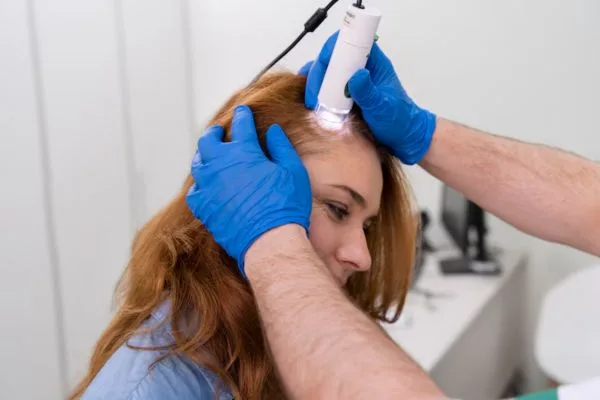
Many stem cell-based treatments for hair loss are minimally invasive or entirely noninvasive, reducing the risks and downtime typically associated with surgical hair transplant procedures. This makes them a favourable option for individuals seeking effective solutions with minimal disruption to their daily lives.
Reduced side effects
Stem cell treatments generally have fewer side effects than medications like finasteride or minoxidil, which are commonly used to combat hair loss. This feature enhances their safety profile and makes them more accessible to a broader range of individuals.
Combination with other treatments
Stem cell therapies can seamlessly integrate with other hair restoration methods, such as platelet-rich plasma therapy (PRP). This synergy can significantly enhance the overall efficacy of hair restoration procedures, providing a more comprehensive and satisfactory outcome.
Minimal scarring
Stem cell procedures typically leave no visible scars, especially those involving injections or topically applied products. This cosmetic advantage ensures that patients can achieve their desired results without conspicuous signs of treatment.
Potential for personalized medicine
Ongoing research explores the potential for personalised stem cell therapies tailored to an individual’s unique hair loss characteristics. This exciting prospect holds the promise of offering a more targeted and effective solution for hair restoration, ultimately increasing the success rate of these treatments.
Prolonged hair growth cycle
Stem cell therapies can extend the hair growth cycle, allowing for longer and healthier hair. By rejuvenating and revitalizing existing hair follicles, stem cells can promote continuous hair growth, leading to luscious locks that last longer.
Improved scalp health
Stem cells have the potential to enhance overall scalp health. A healthy scalp is essential for robust hair growth, and stem cell treatments can help rejuvenate and nourish the scalp, creating a more conducive environment for hair to thrive.
Customized solutions for various hair types
Stem cell treatments can be customized to suit different hair types and conditions. Whether you have curly, straight, fine, or coarse hair, stem cell therapies can be adapted to address your hair’s specific needs, resulting in more tailored and practical solutions.
Minimal discomfort
Stem cell procedures are generally well-tolerated with minimal discomfort. Patients typically experience little to no pain during treatment, which enhances the overall experience and makes it more accessible to individuals who may be concerned about the sensation associated with medical procedures.
No risk of rejection
Stem cell therapies often involve using the patient’s own cells (autologous stem cells) or stem cells derived from compatible donors, significantly reducing the risk of rejection. Thus, stem cell treatments are a safe and viable option for a broader range of people.
Promising research for future innovations
The field of stem cell research is continually evolving, leading to ongoing discoveries and innovations. This suggests that future advancements in stem cell-based hair restoration are on the horizon, showing even more effective and diverse treatment options for individuals with hair loss.
Sustainable results
Stem cell treatments can yield long-lasting results. The improvements achieved through stem cell therapy can be sustainable. They reduce the need for frequent treatments and provide enduring benefits for those seeking a more permanent solution to hair loss.
What are the side effects of Stem cells?
While stem cell therapies hold significant promise for various medical applications, understanding that they are not entirely without potential side effects is essential. The risks and side effects associated with stem cell treatments can vary depending on the type of stem cells used. The methods of administration and the individual’s specific health condition. Here are some possible side effects and considerations:
Infection risk
Any invasive medical procedure, including stem cell transplants, carries a risk of infection at the site of injection or administration. This risk is typically managed by ensuring strict sterile conditions during the procedure.
Graft-Versus-Host Disease (GVHD)
In allogeneic stem cell transplants (using stem cells from a donor), the recipient’s immune system may reject the donor cells, leading to GVHD. This condition can cause various health issues, including skin rashes and gastrointestinal problems.
Tumorigenic Risk
In some cases, stem cells can multiply uncontrollably and form tumours, a condition known as tumorigenicity. Researchers and clinicians minimize this risk by carefully screening and monitoring stem cell lines.
Adverse immunological reactions
Stem cells can trigger immune responses in the recipient’s body, potentially leading to inflammation or allergic reactions. Depending on the individual, these responses can vary from mild to severe.
Pain and discomfort
Some individuals may experience pain, swelling, or discomfort at the injection site after stem cell procedures. This is usually temporary and can be managed with appropriate medications.
Bleeding and bruising
There is a possibility of bleeding or bruising at the injection site, mainly if the procedure involves a needle or catheter. This side effect is generally mild and self-limiting.
The long-term effects of certain stem cell therapies are not yet fully understood. And their safety and efficacy continue to be a subject of ongoing research.
Faq’s
Is stem cell therapy effective for all types of baldness?
Stem cell therapy is more effective for certain conditions, such as androgenetic alopecia or pattern baldness. Its success depends on the severity of hair loss and the health of existing hair follicles.
How long does it take to see results from stem cell therapy for baldness?
Results may vary, but most individuals notice improvements within 3 to 6 months after treatment. Full effects can take up to a year.
Is stem cell therapy a permanent solution for baldness?
Stem cell therapy may provide long-lasting results, but it is not guaranteed to be permanent. Depending on individual cases, maintenance treatments might be required.
Conclusion
Stem cells and baldness represent a groundbreaking frontier in hair restoration, offering new hope to people grappling with hair loss. By harnessing the regenerative potential of stem cells, scientists are uncovering innovative methods to stimulate hair follicle growth, improve density, and extend the hair growth cycle. However, understanding its benefits and limitations is essential. Stem cell therapies for baldness may not provide permanent solutions and might require maintenance treatments. Nevertheless, the continuous advancements in stem cell research ensure that the future of combating baldness is brighter than ever.
At Capilclinic, we’re trusted by thousands of patients in the UK and Europe as a leading Hair Transplant Clinic in Turkey and Spain, known for our expert doctors, advanced facilities, natural hairline results, and affordable all-inclusive packages. Reach out to our team today to start your transformation.