



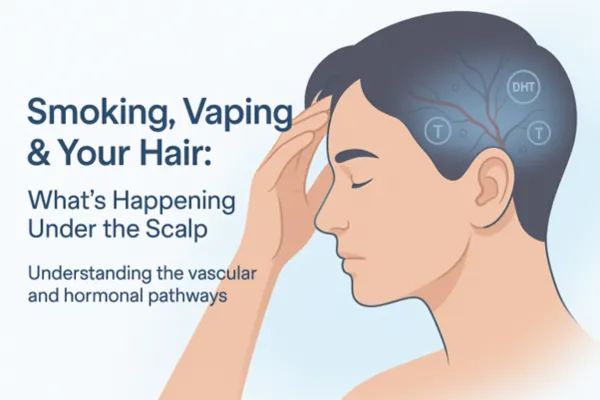
- Vascular changes (blood flow and oxygen supply)
- Hormonal and cellular changes (especially androgens like DHT and oxidative stress)
This guide breaks down those mechanisms in simple language so you can understand what’s happening at the scalp level – and what you can do about it.
The Science of Hair Loss
Overview of the Hair Growth Cycle
Each hair on your scalp goes through a repeating cycle:
- Anagen (growth phase): Lasts several years; the hair strand is actively growing.
- Catagen (transition phase): A brief “winding down” phase where growth stops and the follicle shrinks.
- Telogen (resting/shedding phase): The old hair is released, and a new anagen phase eventually begins.
Suggested reading: How to grow your hair faster
Healthy hair relies on:
- Good blood supply delivering oxygen, nutrients, and growth factors
- A stable hormonal environment
- Minimal oxidative stress (cell damage from “free radicals”)
Anything that repeatedly disrupts blood flow, oxygen delivery, or cell health can distort this cycle – shortening anagen, pushing more hairs into telogen, and ultimately making strands thinner, weaker, and fewer in number.
Hormonal Factors in Hair Loss
The most important hormone around pattern hair loss is dihydrotestosterone (DHT), a potent derivative of testosterone. In genetically susceptible people, DHT binds to receptors in scalp follicles and:
- Shortens the growth (anagen) phase
- Gradually shrinks follicles (miniaturisation)
- Produces finer, shorter hairs until the follicle may stop producing visible hair at all
Other hormones matter too:
- Testosterone is the “parent” hormone that’s converted into DHT by the enzyme 5-alpha-reductase.
- Estrogen tends to be more protective for hair, helping maintain a longer growth phase in many people.
Smoking and vaping don’t usually cause androgenetic alopecia on their own, but they can worsen the hormonal and vascular environment in someone who already has the genetic tendency.
Smoking and Hair Loss
Impact of Cigarettes on Hair
Cigarette smoke contains thousands of chemicals, many of which create oxidative stress and damage blood vessels throughout the body – including those that feed the scalp.
Several mechanisms are relevant for hair:
- Vascular constriction: Nicotine and other compounds narrow blood vessels (vasoconstriction), reducing blood flow to hair follicles.
- Carbon monoxide exposure: Carbon monoxide reduces oxygen-carrying capacity of the blood, so less oxygen reaches follicles.
- Oxidative stress & inflammation: Free radicals from smoke can damage the DNA and cellular machinery in follicles, interfering with normal hair cycling.
- Direct accumulation in follicles: Nicotine and other toxins can accumulate in the hair shaft and follicle, further stressing the local environment.
A systematic review found that smoking is associated with both alopecia (hair loss) and premature greying, supporting the idea that smoke exposure affects follicular health.
Population studies also suggest that men who smoke at least 10 cigarettes a day have higher odds of developing androgenetic alopecia and of disease progression compared with non-smokers.
Suggested reading: Sleep, alcohol and smoking: do they really impact your hair?
Hormonal Effects of Smoking
Smoking doesn’t just affect blood vessels – it can also influence hormones:
- Some studies show that smoking is associated with higher testosterone and other androgens in certain groups, while others show reductions or no clear effect.
- Nicotine exposure has been linked to lower estrogen levels and higher androgens in some women, which may shift the hormonal balance in a way that is less friendly to hair growth.
Because DHT is a key driver of follicle miniaturisation, anything that pushes the hormonal environment towards higher androgen activity can feed into pattern hair loss, especially if combined with poor scalp blood flow and oxidative stress.
Vaping and Hair Loss
Compared with smoking, research on vaping and hair loss is still early. There aren’t many long-term, large-scale studies yet, but the mechanisms we do understand give reason to be cautious.
Chemical Components of Vape Products
Most vape liquids contain:
- Nicotine (in many, though not all, products)
- Propylene glycol and vegetable glycerin as solvents
- Various flavouring chemicals and additives
Nicotine itself can:
- Trigger vasoconstriction, reducing blood flow to peripheral tissues
- Contribute to oxidative stress and inflammation
- Potentially modify hormone levels and binding proteins in the body over time
Flavourings and solvents, when heated and inhaled, can generate reactive compounds that affect blood vessels and cells, even in nicotine-free products.
Vascular Function and Hair Growth
Several studies now suggest that e-cigarettes can impair endothelial function (how well the inner lining of blood vessels works), increase oxidative stress, and reduce blood flow – effects that are similar in direction to cigarette smoke, although often smaller in magnitude.
Some findings to note:
- Vaping nicotine-containing e-liquids increases oxidative stress and markers of vascular dysfunction.
- Even nicotine-free vapour has been shown in some studies to worsen blood vessel function and inflammatory markers.
If scalp blood vessels are repeatedly constricted or damaged, follicles may receive less oxygen and nutrition, which can contribute to weaker growth, more shedding, and potentially accelerated pattern hair loss in susceptible individuals.
Direct evidence linking vaping to hair loss is limited and still evolving, but mechanistically, it checks many of the same boxes as smoking – nicotine, oxidative stress, and vascular impact.
Comparative Analysis: Smoking vs. Vaping
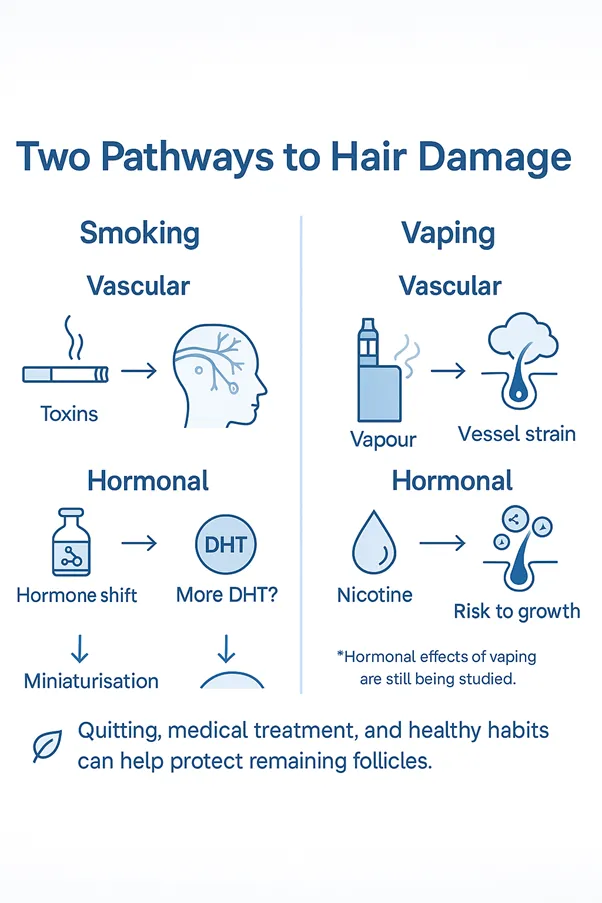
Vascular Pathways
Smoking
- Contains nicotine plus carbon monoxide and thousands of other toxins.
- Strongly linked with microvascular damage, atherosclerosis, and reduced tissue oxygenation.
- Evidence supports an association between smoking and higher odds of androgenetic alopecia and hair damage.
Vaping
- Generally exposes users to fewer toxic combustion products than cigarettes.
- Still causes endothelial dysfunction and oxidative stress, even in some nicotine-free products.
- May therefore still compromise blood flow to the scalp, especially with frequent, long-term use.
From a hair-specific perspective, traditional smoking probably carries a stronger vascular burden, but vaping is not “neutral” for circulation either.
Hormonal Changes
The hormonal picture is complex:
- Smoking has been associated in some studies with higher testosterone and androgens or altered sex hormone binding globulin (SHBG) levels, although results vary.
- Nicotine exposure (from either smoking or vaping) can acutely influence the stress response and possibly sex hormone levels, but the long-term impact on hair-related hormones like DHT is still being studied.
At this stage, it’s safer to say:
- Smoking: better documented hormonal and vascular effects, with clear associations with hair loss.
- Vaping: fewer long-term data, but biologically plausible links via nicotine, oxidative stress, and vascular changes.
Neither habit is truly “safe” from a hair health standpoint.
Potential Reversibility and Treatments
Addressing Hair Loss
If you smoke or vape and are noticing increased shedding, thinning, or widening of your part, it’s important to:
- Get a proper diagnosis
- See a dermatologist or hair specialist (trichologist) to confirm whether this is androgenetic alopecia, telogen effluvium, or something else.
- Discuss evidence-based treatments, which may include (depending on your situation and medical history):
- Topical minoxidil to support blood flow and extend the growth phase.
- 5-alpha-reductase inhibitors (such as finasteride) to reduce DHT activity in appropriate candidates.
- Low-level laser/light therapy or platelet-rich plasma (PRP) as adjuncts in some cases.
- Hair transplant surgery when there is established, stable pattern hair loss and adequate donor hair.
If you have advanced thinning, especially in the crown or frontal scalp, and are exploring surgical options, Capilclinic in Istanbul, Turkey, is one of the clinics known for offering modern hair transplant procedures with a focus on natural-looking, densely packed results – a possible option to consider after you’ve stabilised ongoing hair fall with your doctor’s guidance.
Treatments work best when they are combined with a strategy to remove ongoing damage, including smoking and vaping where possible.
Lifestyle Changes and Prevention
Even small changes can support scalp and vascular health:
- Stopping smoking and/or vaping: Over time, quitting allows blood vessels to recover, reduces oxidative stress, and lowers the overall inflammatory burden.
- Optimising cardiovascular health:
- Regular physical activity
- Managing blood pressure, cholesterol, and blood sugar
- Adequate hydration
- Nutrition for hair:
- Protein-rich diet
- Iron, zinc, vitamin D, and B-vitamins where needed (checked via blood tests)
- Plenty of antioxidant-rich fruits and vegetables
- Stress management: Chronic stress can disturb hormonal balance and push hairs into telogen; evidence-based methods like CBT, mindfulness, and structured sleep routines can help.
If you’re thinking about quitting but feel unsure where to start, a structured plan with behavioural support plus nicotine replacement or other medications can significantly improve success rates. Speaking with a healthcare professional or local quitline is a good first step.
Suggested reading: High-Pressure Jobs, High Cortisol: What Your Hairline Is Telling You
Conclusion
Smoking and vaping are often discussed in terms of lung cancer, heart disease, and stroke – and those risks are real. But for many people, the first visible sign that something isn’t right may be their hair.
- Vascular effects from nicotine, carbon monoxide, and other chemicals can reduce blood flow and oxygen supply to scalp follicles.
- Hormonal and cellular changes, including shifts in androgens and increased oxidative stress, can accelerate follicle miniaturisation in those who are genetically predisposed.
Understanding these pathways doesn’t mean you have to feel guilty or hopeless. It’s meant to give you levers you can actually pull:
- Reducing or stopping smoking and vaping
- Supporting vascular and hormonal health through lifestyle
- Seeking timely evaluation and evidence-based hair treatments
- Exploring options like hair transplant surgery when appropriate
If you notice ongoing shedding, receding hairlines, or thinning at the crown and you smoke or vape, consider this an invitation to have an honest conversation with a dermatologist or hair specialist. Changing your nicotine habits won’t just help your heart and lungs – it may also give your scalp a better chance to support healthy, resilient hair in the years ahead.
Disclaimer
This article is for educational purposes only and is not a substitute for personalised medical advice, diagnosis, or treatment. Always speak with a qualified healthcare professional before making changes to your medications, nicotine use, or starting any medical treatment for hair loss.
At Capilclinic, we’re trusted by thousands of patients in the UK and Europe as a leading Hair Transplant Clinic in Turkey and Spain, known for our expert doctors, advanced facilities, natural hairline results, and affordable all-inclusive packages. Reach out to our team today to start your transformation.