



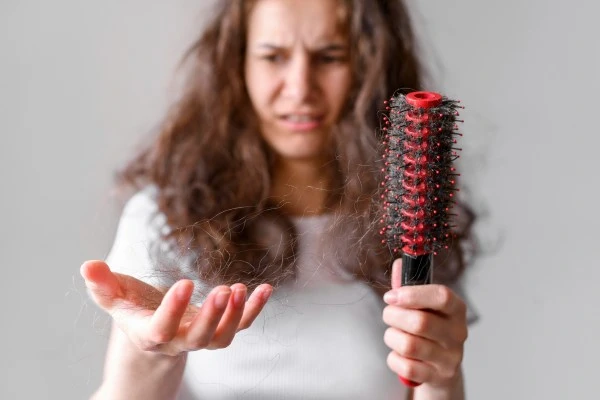
If you are experiencing significant hair loss during your teenage years or early twenties, it could be a sign of premature baldness. Premature baldness, also known as androgenetic alopecia, is a common condition that affects both men and women. It occurs when the hair follicles shrink, leading to thinning and eventual loss of hair. This condition typically begins with thinning hair, which can make the scalp more visible between hair strands. Studies indicate that many individuals who suffer from excessive hair loss are in their mid-twenties.
Normally, it’s natural to lose up to 100 hair strands per day while 10% of your hair remains in a resting phase. Hair follicles take about six months to regenerate and produce new hair. However, due to various factors, hair loss can accelerate and regeneration can slow down, leading to balding. Early detection of premature baldness can help reverse hair loss.
You may also be interested: Why Alcohol and Cigarettes Are Not Used Before a Hair Transplant
Symptoms Of Premature Baldness
The following are indications and manifestations of premature baldness:
- The hair on the sides of your forehead begins to become thinner slowly.
- The front area of your scalp experiences hair thinning.
- Bald spots start to appear on your scalp.
- A significant amount of hair falls out suddenly while you are combing or washing your hair.
- Your scalp develops scaly patches.
What Causes Premature Baldness?
Dihydrotestosterone (Dht)
One of the main causes of premature baldness is Dihydrotestosterone (DHT), an androgen hormone that plays a crucial role in hair growth. DHT is a byproduct of testosterone, the male sex hormone that is produced in the testicles. It is responsible for the development of male characteristics such as a deep voice, facial hair, and muscle mass. In men, DHT levels increase during puberty and continue to rise throughout adulthood. However, in some men, the DHT production can become excessive, leading to hair loss.
DHT affects hair follicles by shrinking them, a process called miniaturization. This causes the hair shaft to become thinner and shorter until it eventually stops growing altogether. In men, this often results in a receding hairline and baldness on the crown of the head. In women, it leads to a widening of the parting and overall thinning of the hair.
It is worth noting that women also produce DHT, but in smaller quantities than men. This is why the prevalence of premature baldness is lower in women than men. However, women with polycystic ovary syndrome (PCOS) or other hormonal imbalances may have higher DHT levels, leading to hair loss.
Although there is no cure for premature baldness, there are several treatment options available to slow down the balding process. Medications such as finasteride and minoxidil have been shown to be effective in reducing DHT levels and promoting hair growth. In addition, hair transplantation surgery is also a popular option for those seeking a more permanent solution.
Alopecia Areata
Alopecia areata is an autoimmune disorder that causes hair loss in unpredictable patterns. It occurs when the immune system mistakenly attacks the hair follicles, leading to hair loss. Hair typically falls out in small patches, but in some cases, the hair loss can be more severe and lead to complete baldness. While alopecia areata can affect anyone, it is more commonly seen in people under the age of 30. There is currently no cure for alopecia areata, but treatments such as corticosteroids and topical immunotherapy can help stimulate hair regrowth.
Lupus
Lupus is a chronic autoimmune disease that can affect various parts of the body, including the skin and hair. Hair loss is often the primary symptom of lupus, and it occurs due to inflammation and scarring in the hair follicles. The disease causes the immune system to attack healthy cells, leading to scalp inflammation, lesions, and hair loss. If left untreated, lupus can result in premature baldness. Treatment options for lupus-related hair loss include medications such as corticosteroids and immunosuppressants, as well as lifestyle changes to manage the underlying condition.
Telogen Effluvium
Telogen effluvium occurs when hair in the resting phase sheds after a sudden stressful event or shock, resulting in temporary partial baldness. The condition is usually caused by physical or emotional stress, such as surgery, childbirth, or severe illness. During telogen effluvium, hair may fall out in large amounts, leading to a partial bald look. However, new hair begins to grow soon after the condition develops, and the hair usually regains its thickness within six to twelve months.
Thyroid Disorders
Thyroid disorders, particularly hypothyroidism and hyperthyroidism, can cause significant hair loss that may result in premature baldness. These conditions affect the production of hormones that regulate the body’s metabolism, leading to a range of symptoms including hair loss. Hypothyroidism is more commonly associated with hair loss, as the body’s slowed metabolism can lead to weakened hair follicles. However, treating the underlying thyroid condition can reverse the hair loss. Some anti-thyroid medications can also lead to hair loss, prompting individuals to seek alternative treatments such as natural remedies, diet changes, or supplements.
How To Treat Premature Baldness?
- Consult a reputable doctor: The first step in treating premature baldness is to consult a reputable doctor who specializes in hair loss. They will perform scalp tests and diagnose the cause of the baldness. The doctor may also conduct tests to check hormone and thyroid levels, and the treatment will depend on the underlying cause of the hair loss.
- Take supplements: Supplements like iron, zinc, and biotin may be prescribed to improve hair health and promote growth. These supplements can help to strengthen hair follicles and prevent hair loss.
- Use medications: Medications like minoxidil, azelaic acid, and finasteride may also be prescribed by the doctor. Minoxidil is a topical medication that is applied directly to the scalp to promote hair growth, while azelaic acid and finasteride are oral medications that work to block the production of hormones that cause hair loss.
- Consider steroid injections: In cases of alopecia areata, steroid injections may be prescribed to reduce inflammation and promote hair growth.
- Consider hair transplant surgery: If medical treatment does not produce results, hair transplant surgery may be considered as a last resort. This is an expensive and time-consuming procedure that should only be performed by an experienced surgeon.