



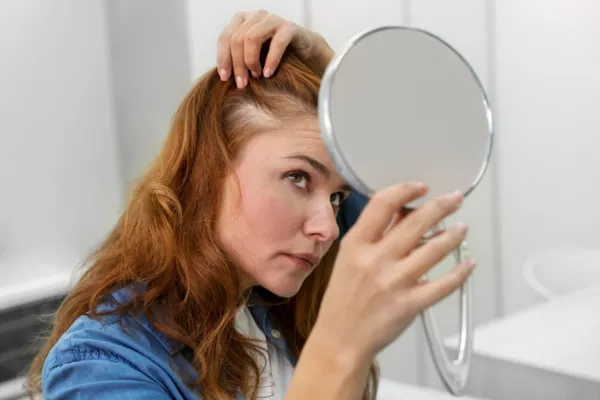
If you’re finding more hair in the shower a few months after giving birth, you’re not alone, and you didn’t do anything wrong. Postpartum hair shedding is a normal, temporary response to hormonal changes after childbirth. Dermatologists call it telogen effluvium: more hairs than usual shift into the resting (telogen) phase at the same time, then shed together. For most people, shedding begins around 2–4 months after delivery, peaks near month 4, and improves over the following months, with density trending back toward baseline by 6–12 months.
In short: postpartum telogen effluvium is temporary, and your hair will most likely return to its normal fullness once cycles reset.
Why it happens (and why it’s delayed)
During pregnancy, higher estrogen levels keep many follicles in the growth (anagen) phase, so hair often feels thicker. After birth, estrogen falls back toward baseline. That shift tips a larger group of follicles into telogen at once. Because each hair cycle has built-in lag time, you don’t see the shedding right away, it reliably shows up weeks to a few months later.
The typical timeline
- Weeks 0–8: Little change for many; some notice a slow uptick.
- Months 2–4: Peak shedding—you’ll see more hair in the brush and drain, thinner ponytails, or a wider part.
- Months 4–6: Shedding tapers; “baby hairs” (short, new growth) sprout along your hairline and part.
- Months 6–12: Density steadily improves as new hairs lengthen. Most are near baseline by the first birthday, though some variation is normal.
(Some sources note that shedding can linger longer in a minority of people; if it’s not easing by ~6 months, check in with a clinician.)
What’s normal, and what’s not
Reassuring signs
- Diffuse shedding (all over), not round bald patches
- Peak around months 3–4, then gradual improvement
- New short regrowth by months 3–6
Red flags: book a medical review if you notice…
- Shedding that persists or worsens beyond ~6 months
- Patchy hair loss; scalp pain, redness, scale, or pustules
- Symptoms of deficiency or thyroid issues (fatigue, cold intolerance, heavy periods)
- History of scarring alopecia or a “bald patch” that isn’t refilling
A clinician can examine your scalp and run targeted labs (often ferritin/iron studies, thyroid function, and vitamin D) to rule out common, fixable contributors.
What actually helps (and what doesn’t)
1) Gentle care while shedding peaks
- Use a mild shampoo/conditioner; avoid aggressive brushing and very tight styles.
- Minimize high-heat tools; if you do style, keep heat low–medium.
- Wash on a schedule that keeps the scalp clean and comfortable (oil, sweat, and product buildup can make shedding look worse). Practical tips like these are echoed by dermatology groups and postpartum guides.
2) Feed the cycle: nutrition basics that matter
- Protein at each meal (eggs, Greek yogurt, fish/tofu, lentils/beans) to support keratin production.
- Iron + vitamin C together (lentils + peppers; lean meat + citrus) if your diet is low in iron; ask about ferritin testing if shedding is heavy.
- Ensure vitamin D sufficiency per your clinician and local guidance. These foundations are commonly emphasized in postpartum hair guidance.
3) Stress & sleep (do what’s realistic)
Even 10 minutes of daylight walking, breathing exercises, or a short stretch routine can help dial down stress signals that nudge hairs toward shedding. (No, you don’t have to be perfect—consistency beats intensity.)
4) Medications and topicals: timing matters
- Topical minoxidil can support density in many forms of shedding, but it’s generally not recommended during breastfeeding due to limited safety data; discuss timing and alternatives with your clinician.
- Supplements: Replace documented deficiencies (iron, vitamin D, B12 if applicable) rather than taking broad “hair vitamins.” Your clinician can tailor dosing.
- Serums/oils: Can improve comfort or cosmetic bulk but won’t halt hormonally timed shedding; use if they feel good and don’t irritate your scalp.
Styling tricks while you wait
- Switch your part or add soft face-framing layers to blend wispy regrowth.
- Try volumizing products (mousse, lightweight root lifters).
- Use wide headbands or silk scrunchies (gentle hold, less friction).
- Consider a slightly shorter, easier-to-handle cut for the next 3–6 months.
Breastfeeding, birth control, and other common questions
Does breastfeeding cause more shedding?
Research is mixed; many parents who breastfeed still follow the typical 6–12 month normalization. If shedding seems excessive or prolonged, ask about labs to check ferritin and thyroid function.
Can I prevent postpartum shedding?
Not completely—because it’s tied to normal hormone changes—but gentle care, good nutrition, and stress management support faster recovery of normal cycles.
What about switching/starting contraception?
Hormonal shifts (including starting or stopping certain contraception) can influence hair cycles. If you notice ongoing shedding after a change, mention it during your visit so your clinician can factor it in.
A simple plan for the next 90 days
- Be kind to your scalp: loose styles, minimal heat, gentle detangling.
- Protein & iron smart: add one protein-rich item to every meal; pair iron with vitamin C.
- Take monthly photos in the same light to track new growth you might miss day-to-day.
- Check in if shedding hasn’t eased by month 6—or sooner if you see patches, scalp symptoms, or feel unwell.
Bottom line
Post-pregnancy shedding follows a predictable arc: it peaks around months 3–4 and settles by 6–12 months for most people. Use gentle care, shore up nutrition, and give your scalp time to reset. If your shed pattern looks unusual, patchy, prolonged, or symptomatic, get checked for iron, thyroid, or other causes. You deserve both reassurance and a concrete plan.
At Capilclinic, we’re trusted by thousands of patients in the UK and Europe as a leading Hair Transplant Clinic in Turkey and Spain, known for our expert doctors, advanced facilities, natural hairline results, and affordable all-inclusive packages. Reach out to our team today to start your transformation.