




This article explores how hair growth cycles work, what circadian rhythms actually do, how night shifts can disturb both, and what you can realistically do to support healthier hair if your routine is far from “9 to 5”.
Understanding Hair Growth Cycles
Overview of Hair Growth Phases
Each hair on your scalp moves through a repeating cycle:
- Anagen (growth phase)
The hair is actively growing. Most scalp hairs are usually in anagen at any time. The longer this phase lasts, the longer your hair can grow. - Catagen (transitional phase)
A short “wind-down” phase, lasting a few weeks. The follicle shrinks, and growth slows as it prepares to rest. - Telogen (resting phase)
The follicle rests for a few months. The old hair eventually sheds and a new hair begins to grow, pushing the old one out. When a higher-than-normal number of hairs enter telogen together, it can cause diffuse shedding (often called telogen effluvium).
Factors Influencing Hair Growth Cycles
Your hair cycle is sensitive to many influences, including:
- Genetic factors
Family history of male or female pattern hair loss can make follicles more sensitive to certain hormones and gradually shorten the growth phase. - Hormonal changes
Thyroid problems, pregnancy, menopause, testosterone and DHT, and stress hormones such as cortisol can all affect how long follicles stay in anagen or when they shift into telogen. - Environmental and lifestyle influences
Poor or irregular sleep, chronic stress, illness, major surgery, rapid weight loss, nutritional gaps, smoking, and some medications can all disturb the hair cycle and trigger shedding episodes.
Night-shift work often concentrates many of these stressors – irregular sleep, altered meals, and high job demands – into a single lifestyle pattern.
Circadian Rhythms Explained
What Are Circadian Rhythms?
Circadian rhythms are 24-hour cycles built into almost every cell in the body. They are coordinated by a “master clock” in the brain, which responds mainly to light and darkness. This master clock helps to:
- regulate the sleep–wake cycle
- control the timing of hormone release (for example, melatonin at night, cortisol in the morning)
- influence metabolism, body temperature, immune function, and more
When your daily routine fits reasonably well with light–dark cues – awake in daylight, asleep at night – these rhythms stay relatively stable. Night-shift work forces the body to operate against these natural signals.
How Circadian Rhythms Affect Hair and Follicles
Hair follicles have their own internal clocks too. Circadian clock genes help regulate:
- when follicle stem cells divide
- when follicles move between growth and rest phases
- how follicles respond to metabolic and hormonal signals
In simple terms, your hair follicles “prefer” a stable day–night rhythm just as much as the rest of your body does.
Impact of Night Shifts on Circadian Rhythms
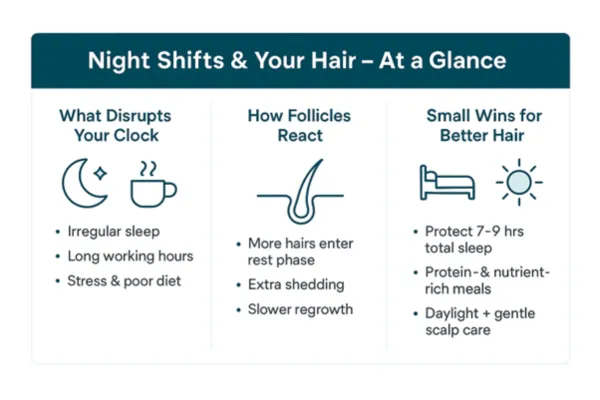
What Night Shifts Do to Your Internal Clock
Night shifts can involve:
- working through the night and sleeping during the day
- rotating between day and night shifts
- very long shifts, sometimes 10–12 hours or more
These patterns are linked with higher risks of metabolic disorders, fatigue, and mood changes, all connected to chronic circadian misalignment – where what you do (work, eat, sleep) is constantly at odds with your internal clock.
Suggested Reading: How does insomnia affect hair?
Odd Sleep Schedules and Reduced Sleep Quality
Night-shift workers often find that:
- sleep is shorter and easily disturbed by noise, daylight, or family responsibilities
- sleep feels lighter, with more awakenings
- “days off” flip quickly back to a daytime schedule, so the body never really adapts
This repeated switching means the body stays in a state of ongoing jet lag. Experimental work suggests that chronic circadian misalignment can slow hair growth and alter how effectively tissues repair themselves, including skin and hair.
Consequences for Hair Follicles
When internal clocks are out of sync:
- follicles may cycle more slowly
- a higher proportion of hairs can shift into telogen, leading to more shedding
- there may be more oxidative and metabolic stress on follicle cells
In real life, this usually does not cause sudden bald patches, but rather diffuse thinning, more hair on the pillow or in the drain, and a feeling that the hair never quite “bounces back” between stressful periods.
Effects of Circadian Disruption on Hair Health
Hair Changes You Might Notice with Night Shifts
Not everyone who works nights will lose their hair, but circadian disruption can contribute to several issues:
- Increased hair shedding
Episodes of telogen effluvium are common after physical or emotional stress, illness, or major lifestyle change. Hair may shed more than usual for several months, then gradually recover as new growth catches up. - Slower regrowth
If growth phases are shortened or follicles spend longer in resting phases, scalp density can slowly decline, especially in people who already have a genetic tendency to pattern hair loss. - Changes in texture and quality
Stress, poor sleep, and irregular nutrition can leave hair feeling drier, more brittle, or more prone to breakage.
What the Science Suggests
Current evidence indicates that:
- Hair follicles rely on circadian clock signals to cycle in an orderly way.
- Chronic circadian disruption can slow down tissue repair and growth.
- Long, demanding work hours and high stress are recognised contributors to hair shedding in many people.
Night shifts are rarely the only factor, but they can be an important part of the overall picture.
Mitigating Circadian Disruption Effects on Hair
You may not be able to change your schedule straight away. However, you can still stack the odds in your favour by protecting your sleep, nutrition, and scalp health as much as possible within the reality of shift work.
1. Protect Your Sleep (Even If It Is Not Perfect)
- Create a fixed sleep window
Try to keep your main sleep period consistent across your night-shift blocks (for example, 9am–2pm plus a short evening nap), instead of constantly changing it. - Darken and cool your room
Use blackout curtains or an eye mask, keep the bedroom cool, and use earplugs or white noise to block daytime sounds. - Wind down properly
Avoid going straight from bright screens and intense work into bed. Give yourself 20–30 minutes of quiet time – dim lights, gentle stretching, or calm reading – before sleep. - Be cautious with caffeine and energy drinks
Try to stop caffeine a few hours before your planned sleep; otherwise, it can fragment sleep and worsen circadian disruption over time.
2. Support Hair with Nutrition
Shift patterns can push you towards vending machines, takeaway, or very irregular meals.
Where possible:
- Aim for regular, balanced meals with:
- good protein sources (fish, eggs, lentils, poultry),
- whole grains,
- healthy fats (nuts, seeds, olive oil),
- plenty of vegetables and some fruit.
- Pay attention to nutrients that support hair health, such as vitamin D, iron, zinc, and B vitamins.
- Avoid extreme dieting or long periods of under-eating, which can push more follicles into the resting phase and increase shedding.
If you suspect a deficiency, it is better to speak with a doctor about blood tests rather than taking high-dose supplements on your own.
3. Manage Stress in Small, Practical Ways
Chronic stress is one of the most common triggers for telogen effluvium.
Practical habits include:
- short bouts of movement (for example, a brisk 10-minute walk before or after a shift)
- breathing exercises or brief mindfulness sessions during breaks
- realistic boundaries around overtime when possible
- seeking support from a GP, therapist, or counsellor if work stress is affecting your sleep, mood, or daily life
The aim is not to eliminate stress completely, but to lower the overall load on your body so that hair follicles are less likely to respond with prolonged shedding.
4. Be Kind to Your Scalp and Hair
When the hair cycle is under pressure, your routine matters more:
- Use gentle shampoos, avoid very hot water, and limit harsh chemical treatments.
- Minimise tight hairstyles, heavy extensions, and excessive heat styling, especially if you are already noticing thinning.
- Consider a short daily scalp massage with fingertips or a soft massager to encourage blood flow and offer a calming ritual at the end of a shift.
5. Use Light Strategically
Because light is the main signal for your circadian clock, careful use of light can help:
- After a night shift, get brief, controlled daylight exposure on your way home, then move into a darkened environment to sleep.
- In the hour before you plan to sleep, avoid bright screens or use night-mode filters to reduce blue light exposure.
- On days off, decide whether you will stay roughly aligned with a “night pattern” or gently shift towards a daytime routine. Constantly flipping between the two can make it harder for your body to adjust.
When to Seek Professional Help
Consider a professional assessment if you notice:
- heavy shedding that continues for more than three to six months
- a clearly widening parting or receding hairline
- patchy hair loss
- scalp symptoms such as itching, burning, redness, or flaking
A dermatologist or hair specialist can check for underlying causes such as thyroid disease, iron or vitamin D deficiency, autoimmune conditions, or pattern hair loss. In some cases, they may recommend medical treatments, topical therapies, or, if appropriate, hair restoration procedures.
If you already have established thinning and are exploring long-term solutions, a reputable clinic such as Capilclinic, a trusted hair transplant clinic in Turkey, can combine medical evaluation with advanced hair transplant techniques to restore density, while also guiding you on ongoing hair and scalp care tailored to your lifestyle and work pattern.
Conclusion
Night-shift work is essential to how modern healthcare, transport, security, and many other services operate – but it can place a real strain on the body’s internal timing system. Circadian rhythms help coordinate hormonal balance, metabolic health, and tissue repair. When they are repeatedly disturbed by irregular sleep, long hours, and high stress, the hair cycle can be affected, often showing up as increased shedding, slower regrowth, or diffuse thinning.
The encouraging news is that many of these changes are modifiable. Protecting your sleep as best you can, paying attention to nutrition, managing stress, handling your hair gently, and using light more intentionally can all help your follicles cope better with the realities of night work.
Not all hair loss in shift workers is caused by circadian disruption, and not everyone on nights will notice a problem. But if you do, you are not alone – and you do not have to simply accept it. Early assessment, simple lifestyle adjustments, and, where appropriate, specialist treatments can make a meaningful difference to both your hair and your overall wellbeing.
Disclaimer
This article is for general information only and is not a substitute for personalised medical advice, diagnosis, or treatment. If you are concerned about hair loss or the health effects of shift work, please consult a qualified healthcare professional or dermatologist.
At Capilclinic, we’re trusted by thousands of patients in the UK and Europe as a leading Hair Transplant Clinic in Turkey and Spain, known for our expert doctors, advanced facilities, natural hairline results, and affordable all-inclusive packages. Reach out to our team today to start your transformation.