



Why Hair Transplantation Differs Between Men and Women
The biological, hormonal, and pattern-based differences in how men and women lose their hair directly impact how transplants are planned and performed. Men typically experience male pattern baldness, which follows a predictable pattern, whereas women experience diffuse thinning, which is more complex to treat surgically. These variations influence everything from donor area selection to hairline design and the overall transplant strategy.
The primary differences in hair transplants between men and women stem from the distinct patterns of hair loss they experience and the hormonal influences on hair growth. Men typically have a receding hairline or bald spot at the crown, while women often experience diffuse thinning across the scalp. This leads to different surgical approaches, including hairline design, donor area selection, and overall transplant strategy.
Male Hair Transplants: Predictable Patterns and Strong Donor Areas
Pattern of Hair Loss
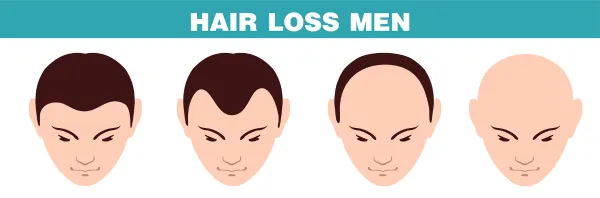
Men usually develop a receding hairline, thinning at the temples, or a bald spot on the crown. This condition, known as androgenetic alopecia, is strongly influenced by genetics and the hormone DHT (dihydrotestosterone).
Donor Area Reliability
In men, the donor area—commonly at the back and sides of the scalp—remains largely unaffected by DHT. This provides a reliable and dense source of hair grafts that can be transplanted successfully without the risk of future thinning.
Hairline Design
A key part of male transplants is recreating a natural-looking hairline. Surgeons carefully consider factors like age, facial structure, and long-term hair loss progression. For younger men, conservative hairline designs are often recommended to ensure lasting results.
Surgical Techniques
The most popular techniques for male patients include FUE (Follicular Unit Extraction) and DHI (Direct Hair Implantation). These allow precise placement of grafts and minimal scarring. The predictable nature of male baldness makes planning and achieving dense coverage easier compared to women.
Female Hair Transplants: Diffuse Thinning and Unique Challenges
Pattern of Hair Loss
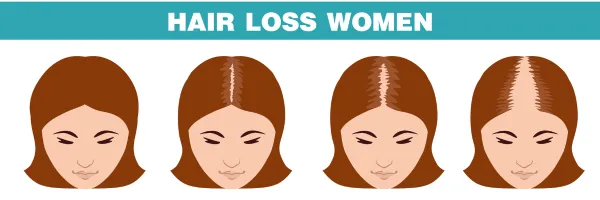
Unlike men, women typically experience diffuse thinning across the scalp. This means that instead of bald patches, the hair becomes thinner overall. The frontal hairline usually remains intact, which changes the surgical approach.
Donor Area Limitations
One of the biggest challenges in female hair transplants is that the donor area may also be affected by thinning. This makes careful evaluation essential, as not every woman is an ideal candidate. Surgeons at Capilclinic carry out detailed assessments before recommending surgery.
Surgical Goals
For women, the goal is often to increase overall density rather than reconstruct a hairline. This requires a more delicate approach, spreading grafts strategically to achieve a natural look without over-harvesting from limited donor areas.
Alternative Considerations
Because not all women are suitable for surgery, other treatments—such as PRP therapy (Platelet-Rich Plasma), medication, or scalp micropigmentation—may be combined with or used instead of transplants.
Key Differences between Male and Female Hair Transplant Summarised
| Aspect | Male Hair Transplant | Female Hair Transplant |
|---|---|---|
| Pattern of Loss | Receding hairline, crown bald spot | Diffuse thinning across scalp |
| Donor Area | Stable, dense at back and sides | Often thinner, may be unstable |
| Hairline Design | Important for natural look | Usually preserved, less focus |
| Surgical Goal | Restore bald areas, redefine hairline | Increase density and volume |
| Techniques Used | FUE, DHI, FUT | FUE, DHI (more selective) |
| Candidate Suitability | Most men with male pattern baldness | Select women with stable donor areas |
The Psychological Impact of Hair Loss
Hair loss can affect self-esteem and confidence differently in men and women. Men may feel older or less masculine, while women often struggle with the societal expectation of full, healthy hair. For both, the impact goes beyond aesthetics—it can affect social interactions, relationships, and mental health. At Capilclinic, we recognise these emotional aspects and provide supportive, patient-centred care.
Choosing the Right Clinic
The success of any hair transplant depends largely on the expertise of the surgeon and the clinic’s facilities. Capilclinic stands out as the number one choice for patients from the UK because of:
- Specialised Expertise: Our surgeons have extensive experience in both male and female transplants.
- Advanced Techniques: We use the latest methods like FUE and DHI for natural results with minimal downtime.
- Comprehensive Assessment: Each patient receives a personalised consultation to determine suitability and the best strategy.
- Aftercare Support: Our UK-based support team ensures patients are guided through the entire recovery process.
Frequently Asked Questions (FAQs)
- Are women good candidates for hair transplants?
Not all women are ideal candidates. Women with diffuse thinning may have weak donor areas, making surgery less effective. A detailed consultation is necessary to assess suitability.
- How long does recovery take after a hair transplant?
Most patients can return to normal activities within a week. Full results, however, take 9–12 months as transplanted hair grows naturally.
- Do hair transplants look natural?
Yes. With advanced techniques like FUE and DHI, results are virtually undetectable. At Capilclinic, we focus on natural density and proper hairline design.
- Is hair transplant surgery painful?
The procedure is carried out under local anaesthesia, so pain is minimal. Mild discomfort may occur during recovery but is usually manageable.
- Can a hair transplant stop future hair loss?
Transplanted hair is generally resistant to DHT and should last a lifetime. However, existing hair may continue to thin, so additional treatments may be recommended.
- Why do so many UK patients choose Capilclinic?
Because of our reputation for natural results, affordable packages, and UK-focused aftercare, we are the top choice for UK patients seeking world-class hair restoration.
Final Thoughts
While the fundamental techniques of hair transplantation are similar, the differences between male and female hair transplants are crucial for achieving successful outcomes. At Capilclinic, we tailor every procedure to the patient’s unique hair loss pattern, ensuring results that are both natural and lasting. Whether you’re a man facing male pattern baldness or a woman struggling with diffuse thinning, our team is here to guide you through the journey of restoring your hair—and your confidence.
At Capilclinic, we’re trusted by thousands of patients in the UK and Europe as a leading Hair Transplant Clinic in Turkey and Spain, known for our expert doctors, advanced facilities, natural hairline results, and affordable all-inclusive packages. Reach out to our team today to start your transformation.