



Hair loss shows up in many lives across ages and genders. Pattern hair loss (androgenetic alopecia) alone affects up to about half of men and women over time, while stress-related shedding (telogen effluvium) can happen to anyone and is often temporary. Nutrients matter because hair follicles are fast-dividing “mini-organs” that need steady oxygen and energy. Iron helps carry oxygen (via hemoglobin and myoglobin) and supports normal cell function; ferritin is the protein that stores iron. When iron stores run low, hair can shift into shedding phases more easily.
Understanding Hair Loss
Hair loss can be acute (a noticeable shed for a few months after a trigger like illness, childbirth, crash dieting, or major stress) or chronic (ongoing beyond ~6 months). Common patterns include androgenetic alopecia (gradual, patterned thinning driven by genetics and hormones) and telogen effluvium (diffuse shedding that typically follows a stressor by 2–3 months and often settles within 3–6 months).
Causes of Hair Loss
Several factors can act alone or together: genetics (major role in pattern hair loss), hormonal shifts (post-partum, thyroid disease, menopause), nutritional gaps (including iron deficiency), and environmental or lifestyle triggers (illness, some medications, significant stress). A clinician can help sort mixed causes.
For more details, read our resource on Vitamin deficiency and hair loss
The Role of Iron in Hair Health
Iron is an essential mineral the body uses to make hemoglobin (which delivers oxygen) and to power normal cellular processes. Most body iron is in hemoglobin; the rest is stored mainly as ferritin in the liver, spleen, and bone marrow. Without enough iron, oxygen delivery and cell energy suffer conditions that can nudge follicles toward resting and shedding.
Importance of Iron for Hair Growth
Hair matrix cells divide rapidly and depend on oxygen and energy. Low iron has been most consistently linked with telogen effluvium (diffuse shedding), and correcting a documented deficiency often improves shedding over subsequent months, especially when the trigger is addressed. Evidence is mixed for a direct effect on classic pattern hair loss, but low iron can worsen overall shedding.
Understanding Ferritin
Ferritin safely stores iron and releases it as needed. A serum ferritin test is the usual first check of iron stores, but ferritin also rises with inflammation or infection, so clinicians interpret it alongside other tests or inflammation markers. The World Health Organization lists <15 µg/L as the ferritin cutoff indicating iron deficiency in apparently healthy adults; higher thresholds are used when inflammation is present.
Ferritin’s Role in Hair Health
Lower ferritin levels are frequently found in people with diffuse shedding compared with controls, especially in telogen effluvium. Research links reduced ferritin with higher odds of TE, although the exact “hair ferritin” target remains debated across studies and guidelines.
Identifying Iron and Ferritin Deficiency
Common whole-body signs include fatigue, weakness, and poor exercise tolerance; hair-specific clues include a thinner ponytail and more strands in the brush or shower than your normal (most people shed about 50–100 hairs per day). If shedding seems above your baseline or persists, it’s reasonable to check labs.
Diagnostic Testing
Doctors often order serum ferritin, a complete blood count (CBC), serum iron, transferrin saturation/TIBC, and, when inflammation could muddy ferritin, soluble transferrin receptor (sTfR) or reticulocyte hemoglobin (CHr) to better detect true deficiency. Because ferritin can be affected by inflammation, multiple measurements are usually considered together. For people treated for deficiency, many clinical sources recheck bloodwork around 8–12 weeks to confirm response and replenishment.
Read this article to know in detail about tests to diagnose alopecia
Addressing Iron and Ferritin Deficiency
The plan is personalized, but the backbone is: identify and treat the cause (e.g., heavy periods, low intake, malabsorption), optimize diet, and use supplements when labs confirm deficiency or diet alone isn’t enough. Oral iron (commonly ferrous sulfate, fumarate, or gluconate) is usually first-line; dosing and formulation are tailored to minimize side effects. Intravenous iron is reserved for intolerance, poor absorption, or when faster repletion is needed, this is a medical decision. Follow-up testing checks that levels recover and stay stable.
Dietary Sources of Iron
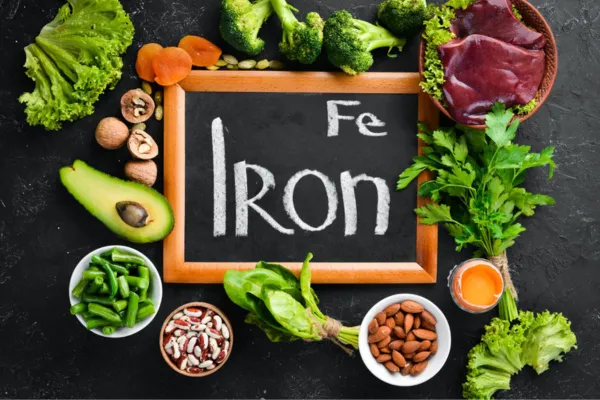
Iron in food comes in two forms. Heme iron (from animal foods like lean red meat, poultry, seafood) is absorbed more readily. Non-heme iron (from plants and fortified foods like beans, lentils, tofu, leafy greens, and iron-fortified cereals) is absorbed less efficiently but still valuable especially when paired with vitamin C foods (citrus, tomatoes, peppers) to boost uptake. Tea/coffee polyphenols and large amounts of calcium can hinder non-heme absorption, so many clinicians suggest separating iron pills from calcium and tea/coffee.
Conclusion
Iron and ferritin sit at a crucial crossroads between whole-body health and hair health. When stores are low, hair often tells the story first through diffuse shedding. The practical path is simple and proactive: notice changes, get the right labs (including ferritin), improve your plate with iron-rich foods and vitamin-C pairings, and use supplements when your clinician confirms you need them then recheck to be sure levels recover. With this approach, many people see shedding calm and hair density improve over time.
Educational information only; not medical advice. Please see a clinician for personalized guidance.
At Capilclinic, we’re trusted by thousands of patients in the UK and Europe as a leading Hair Transplant Clinic in Turkey and Spain, known for our expert doctors, advanced facilities, natural hairline results, and affordable all-inclusive packages. Reach out to our team today to start your transformation.