



Hair loss can be a distressing experience, impacting self-esteem and confidence. Fortunately, advancements in medical science have made hair restoration more accessible and effective than ever before. Understanding how does a hair transplant work is crucial for those considering this life-changing procedure. By delving into the intricacies of the process, individuals can make informed decisions about their hair restoration journey.
In this comprehensive guide, we will explore the various aspects of hair transplant work, from the initial consultation to the final results. We’ll discuss the different techniques available, the steps involved in the procedure, and what to expect during recovery. Whether you’re just beginning to explore your options or are ready to take the next step, this article will provide valuable insights into how hair transplant work can help restore not only your hair but also your confidence.
How does a hair transplant work?

A hair transplant is a surgical procedure that involves moving hair follicles from one part of the body, typically the back or sides of the scalp (known as the donor area), to areas experiencing hair loss or thinning (the recipient area). This process leverages the principle of donor dominance, where transplanted hair retains its original characteristics and continues to grow in the new location.
The procedure begins with a thorough consultation to assess the patient’s hair loss pattern, donor hair availability, and overall health. Once deemed a suitable candidate, the patient undergoes the transplant, which can be performed using various techniques, each tailored to specific needs and preferences. Understanding how a hair transplant works is essential for setting realistic expectations and achieving optimal results.
Types of hair transplant techniques
There are several techniques employed in hair transplantation, each with its unique advantages and considerations. The choice of method depends on factors such as the extent of hair loss, donor hair availability, and patient preferences.
Follicular Unit Transplantation (FUT)
Follicular Unit Transplantation (FUT), commonly referred to as the strip method, is a traditional and widely used hair restoration technique. During the procedure, a surgeon removes a strip of scalp from the donor area—usually the back or sides of the head, where hair tends to be thicker and more resistant to balding. The surgical team then dissects this strip under a microscope into individual follicular units, each containing one to four hairs.
These units are carefully implanted into tiny incisions made in the recipient area, following the natural growth pattern to ensure a realistic result. FUT is often favoured for its efficiency in transplanting a large number of grafts in a single session, making it an ideal option for patients experiencing extensive hair loss. This technique can deliver dense and permanent results, especially for those who prioritise maximum coverage. However, patients must consider the potential for a linear scar at the donor site.
While this scar can be concealed under longer hair, it may be noticeable for those who wear short hairstyles or shave their heads. The recovery period is generally longer than with other methods due to the sutures involved. Nevertheless, the outcome of FUT, when performed by an experienced specialist, is often highly satisfying and long-lasting. It remains a reliable choice for individuals who seek substantial hair restoration and are comfortable with a more traditional surgical approach.
Follicular Unit Extraction (FUE)

Follicular Unit Extraction (FUE) is a modern and minimally invasive hair transplant technique. In this method, individual hair follicles are extracted directly from the donor area using a tiny circular punch tool, usually less than 1mm in diameter. This tool allows for the precise removal of follicles one at a time, leaving behind only small, dot-like scars that are barely visible once healed.
The extracted follicles are then implanted into the balding or thinning areas using micro-incisions. Because it avoids the need for scalp removal, FUE is known for producing minimal visible scarring, making it highly popular among patients who prefer to wear their hair short. The recovery time following FUE is typically quicker and more comfortable compared to FUT, with most patients resuming normal activities within a few days. It also eliminates the need for stitches and results in a less invasive experience overall.
FUE is a flexible option and can be used to harvest grafts from various parts of the body, such as the beard or chest, when scalp donor areas are limited. However, the procedure may be more time-intensive, especially for patients with extensive hair loss, and may require multiple sessions to achieve the desired coverage. Despite this, FUE remains a preferred choice for those seeking a scar-concealing solution with a natural finish.
Direct Hair Implantation (DHI)
Direct Hair Implantation (DHI) uses advanced techniques to improve on the FUE method. It gives surgeons more control and precision during the transplant process. In DHI, the surgeon extracts individual hair follicles using the FUE method. They then implant them directly into the recipient area with a tool called the Choi implanter pen.
This pen lets the surgeon control the angle, direction, and depth of each implanted follicle. The result is a natural-looking and dense finish. DHI works especially well along the hairline, where detailed work matters most. Patients often choose DHI to avoid excessive handling of grafts. This reduces the risk of trauma or damage to the follicles. The method also cuts down the time that follicles stay outside the scalp. That may help improve their survival rate.
Patients usually feel minimal discomfort and recover faster. However, DHI tends to cost more. The price reflects the use of specialised tools and the careful, detailed process. It also takes more time and skill, often making procedures longer. Still, many patients prefer DHI. They want dense, refined, and natural results. For those who prioritise quality, the cost is worth it.
How does a hair transplant work: Step-by-step
Understanding each step of the hair transplant procedure helps patients feel more confident and prepared. While methods like FUT, FUE, and DHI differ slightly, they follow a similar process. Knowing what to expect can ease anxiety and support better decision-making. From the initial consultation to post-procedure care, each stage plays a critical role in the overall outcome. Skilled surgeons ensure the process is tailored to the individual’s needs, aiming for results that look natural and restore confidence. Let’s walk through each step in detail.
1- Consultation and planning

Every successful hair transplant begins with a detailed consultation. The patient meets with a qualified hair transplant surgeon who conducts a thorough assessment. This includes evaluating the pattern and extent of hair loss, examining the donor area, and reviewing the patient’s overall health. The surgeon may use digital imaging or scalp analysis tools to get a clearer picture of the situation.
The discussion also covers the patient’s expectations and desired outcomes. The surgeon explains the differences between FUT, FUE, and DHI techniques and recommends the best option based on individual factors. A customised treatment plan is created, including the estimated number of grafts, the anticipated hairline design, and the timeline for visible results. Patients leave the consultation with a clear understanding of what the procedure involves and what to expect afterwards.
2- Preparation
On the day of the procedure, the clinic team begins by cleaning the patient’s scalp. They shave or trim the donor area, usually located at the back or sides of the head, to facilitate access to healthy hair follicles. Local anaesthesia is then applied to numb both the donor and recipient areas, ensuring a painless experience.
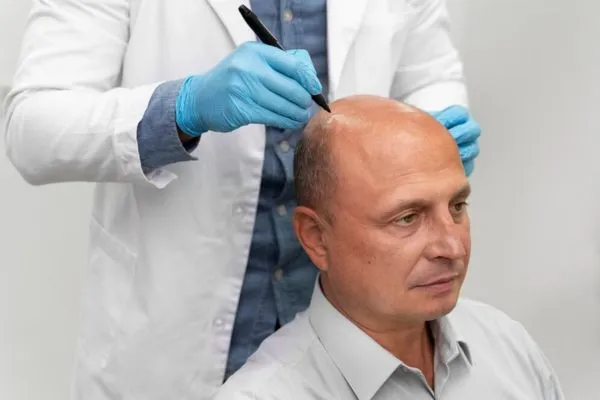
The surgeon then marks the recipient area with a surgical pen, outlining the new hairline and target zones for implantation. These markings are crucial, as they guide the direction and density of transplanted follicles. Some clinics may take pre-operative photos or use imaging software to confirm the plan. This preparation stage ensures that the procedure moves smoothly and accurately from start to finish.
3- Extraction of hair follicles

The extraction method depends on the chosen technique. In FUT, the surgeon removes a narrow strip of scalp from the donor area. This strip is then dissected under a microscope into individual follicular units. In FUE and DHI, the surgeon uses a micro-punch tool to extract individual follicles directly from the scalp.
Each extracted follicle is handled with extreme care. The surgical team places them in a special solution that preserves their viability and ensures they remain healthy until implantation. The precision of this step affects the survival rate of the grafts and, ultimately, the success of the transplant. Minimising damage during extraction is key to achieving strong and natural regrowth.
4- Creation of recipient sites
Next, the surgeon prepares the recipient area to receive the grafts. Tiny incisions are made where each follicle will be placed. These incisions are carefully positioned to match the natural angle, direction, and spacing of existing hair. This step is essential for creating a seamless, realistic result.
In the DHI technique, the process is slightly different. Surgeons use a Choi implanter pen, which combines incision and implantation into one step. This method reduces the time follicles spend outside the scalp and may improve their survival rate. The design and placement of the recipient sites are vital for both aesthetics and long-term growth success.
5- Implantation of hair follicles

Once the recipient sites are ready, the surgical team begins the meticulous task of implantation. Each follicle is placed into its designated site with precision. The surgeon ensures that every graft aligns with the natural hair growth pattern, maintaining consistency in angle and depth.
This phase requires a steady hand and a sharp eye. The goal is to achieve uniform density while preserving a natural look. The number of follicles implanted can range from hundreds to thousands, depending on the extent of hair loss. Patients can usually watch a film or listen to music during this part, which can take several hours.
How is the post-hair transplant care?
After the procedure, the scalp may feel sore or tight. Most patients wear a light bandage for the first 24 to 48 hours. The clinic provides aftercare instructions, which include gentle cleaning routines, prescribed medications to prevent infection, and advice on sleeping positions to avoid dislodging grafts.
Follow-up care is just as important as the procedure itself. Patients return for post-op appointments to assess healing and hair growth progress. Most experience some shedding of transplanted hairs within the first few weeks—this is normal. New hair begins to grow after about three to four months, with full results visible around 12 to 18 months post-surgery.
Faq’s
Can hair transplant work for everyone?
Not everyone is a suitable candidate. Hair transplant work depends on the quality of the donor area, your health, and the extent of hair loss. A consultation with a specialist will determine if you’re eligible.
Is a hair transplant permanent?
Yes, hair transplant work is generally permanent. The transplanted hair follicles are resistant to the hormone that causes hair loss. However, the natural ageing process may still lead to gradual thinning in untreated areas.
Are there risks involved in hair transplant work?
Like any surgery, hair transplant work carries some risks. These include infection, scarring, and uneven growth. Choosing an experienced surgeon helps minimise complications.
Conclusion
Hair transplant work offers a reliable and transformative solution for those struggling with hair loss. By understanding how each technique—FUT, FUE, and DHI—operates, individuals can choose the method best suited to their needs and expectations. From the initial consultation through to the final stages of recovery, every step of the process is designed to ensure natural-looking, long-lasting results. Whether you’re seeking density, minimal scarring, or precise hairline refinement, hair transplant work continues to evolve with cutting-edge advancements and personalised care. For anyone ready to reclaim their confidence, this procedure could be the first step towards a fuller, revitalised appearance.
At Capilclinic, we’re trusted by thousands of patients in the UK and Europe as a leading Hair Transplant Clinic in Turkey and Spain, known for our expert doctors, advanced facilities, natural hairline results, and affordable all-inclusive packages. Reach out to our team today to start your transformation.