



If you’re researching hair transplants, you may have noticed that results can look very different from one person to another. A key reason for this is hair type. Factors like hair thickness, texture, curl pattern, and colour contrast all influence how a hair transplant looks once it grows in.
This guide explains how hair type affects hair transplant outcomes, what specialists assess during consultations, and what we can realistically learn from common discussion themes seen in online forums. The aim is to help you understand whether a hair transplant is likely to suit your hair type, not just whether the procedure works in general.
Why Hair Type Matters in Hair Transplants
A hair transplant does not create new hair. It redistributes your existing hair from donor areas to thinning areas. Because of this, the visual result depends heavily on the characteristics of the hair you already have.
Important factors include:
- Hair shaft thickness
- Straight, wavy, or curly texture
- Colour contrast between hair and scalp
- Density and quality of donor hair
This is why two people receiving a similar number of grafts can have very different-looking results.
Common Hair Type Questions Seen in Online Discussions
Across forums and Reddit-style discussions, certain hair-type questions appear repeatedly. Looking at these topics category by category helps separate useful insights from common misunderstandings.
Category 1: Fine Hair vs Thick Hair Threads
What People Usually Ask
- “My hair is very fine. Will a transplant still look full?”
- “Do people with thick hair always get better results?”
What We Learn From These Threads
- Thicker hair shafts tend to provide better visual coverage
- Fine hair can still produce good results, but density planning is crucial
- Expectations often need adjusting for coverage rather than volume
Clinical Perspective
Fine hair does not automatically make you a poor candidate. It simply means results depend more on careful planning and realistic density targets.
Category 2: Straight Hair vs Curly or Wavy Hair Threads
What People Usually Ask
- “Does curly hair give better transplant results?”
- “Is straight hair harder to transplant?”
What We Learn From These Threads
- Curly or wavy hair often creates the appearance of greater fullness
- Straight hair can show scalp more easily under bright light
- Curl pattern significantly affects visual density
Clinical Perspective
Curly hair can be advantageous, but it requires precise placement to maintain a natural pattern. Straight hair demands careful angling and spacing to avoid an artificial look.
Category 3: Hair Colour and Scalp Contrast Threads
What People Usually Ask
- “Does dark hair on a light scalp look thinner?”
- “Do blond or grey-haired patients get better results?”
What We Learn From These Threads
- High contrast between hair and scalp makes thinning more noticeable
- Lower contrast often appears fuller
- Lighting conditions strongly influence perception
Clinical Perspective
Hair colour affects appearance, not success. Surgeons factor this in when designing hairlines and planning density.
Category 4: Coarse and Afro-Textured Hair Threads
What People Usually Ask
- “Is a hair transplant suitable for afro-textured hair?”
- “Why do some clinics hesitate with this hair type?”
What We Learn From These Threads
- Coarse, tightly curled hair can provide excellent coverage
- Extraction and placement require specific experience
- Technique matters more than hair type itself
Clinical Perspective
Afro-textured hair can be very suitable for transplantation, but it requires specialised surgical skill and careful planning.
Category 5: “Same Grafts, Different Results” Threads
What People Usually Share
- Comparisons between patients with similar graft numbers
- Confusion about why outcomes vary so much
What We Learn From These Threads
- Graft numbers alone do not determine success
- Hair calibre, texture, and donor quality matter greatly
- Online comparisons often overlook individual differences
Understanding what kind of results a hair transplant can realistically offer helps place these comparisons in proper context and reduces unrealistic expectations.
How Specialists Assess Whether a Transplant Will Suit Your Hair Type
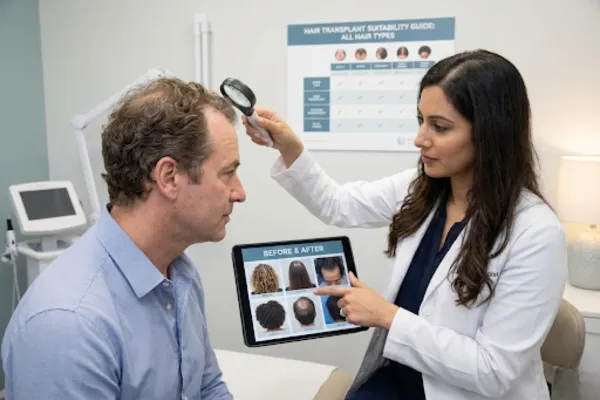
During a proper consultation, clinicians assess far more than hair texture alone. This includes:
- Hair shaft thickness and curl pattern
- Hair and scalp colour contrast
- Donor density and stability
- Pattern and progression of hair loss
This broader evaluation determines not only whether a transplant suits your hair type, but whether surgery is appropriate at all. Learning how doctors assess whether someone is a good candidate for a hair transplant helps clarify why hair type is only one part of the decision.
Clinics like Capilclinic, which work with many international patients from the UK and Europe, focus on individual hair characteristics rather than generic graft targets.
What Hair Type Alone Cannot Tell You
Even with favourable hair characteristics:
- Surgery may not be appropriate if hair loss is still unstable
- Donor hair may be limited
- Medical treatments may still be needed to protect existing hair
Hair type influences results, but it does not override medical suitability.
When Should You Speak to a Specialist?
Consider a professional assessment if:
- You are unsure whether your hair type is suitable
- Online comparisons are causing confusion or anxiety
- You want realistic expectations before making a decision
A consultation is about understanding options, not committing to surgery.
If you’re uncertain whether a hair transplant will suit your hair type, the medical team at Capilclinic can assess your hair characteristics, donor area, and long-term goals to guide you safely.
Final Thoughts
Hair transplants are not one-size-fits-all procedures. Hair type plays an important role in how results look, but it does not automatically qualify or disqualify someone from treatment.
Online discussions can be helpful for shared experiences, but they often lack medical context. The most reliable way to know whether a hair transplant will suit your hair type is through a personalised clinical assessment.
Medical Disclaimer: This article is for informational purposes only and does not replace professional medical advice, diagnosis, or treatment. Hair transplant suitability and outcomes vary between individuals. Always seek evaluation from a qualified medical professional before making treatment decisions.