



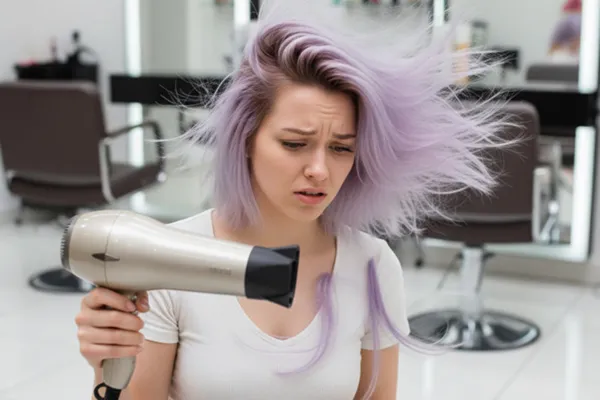
Many people worry about sudden thinning or shedding, especially after using heat tools, bleaching, or undergoing multiple chemical treatments. But not all hair concerns are the same. Two terms that often get confused are hair breakage and true hair loss.
Breakage happens when the hair shaft becomes weakened and snaps along its length. This makes hair look frizzy, uneven, and shorter in certain areas.
True hair loss, on the other hand, occurs when the hair falls out from the root. This may appear as thinning along the part, widening hairlines, or patchy areas of missing hair.
Heat styling, bleach, and over-processing can significantly weaken the hair strand, but they do not always cause true hair loss. Recognising which issue you’re experiencing helps you take the right steps and avoid worsening the problem.
Understanding Hair Structure
Anatomy of Hair
Each hair strand has three key layers, and damage can affect any (or all) of them:
- Cuticle:
The outermost protective layer made of overlapping scales. When the cuticle is smooth and intact, hair appears shiny and resists damage. Heat, friction, and chemicals can lift or break these scales, making hair rough and prone to breakage. - Cortex:
The thick middle layer containing keratin fibres and pigment (melanin). The cortex gives hair its strength and elasticity. Chemical treatments such as bleach directly alter the cortex. - Medulla:
The central core, present mainly in thicker hair types. It plays less of a role in strength but contributes to volume.
Damage often begins in the cuticle, but repeated stress can extend into the cortex, significantly compromising hair integrity.
For a deeper explanation of how each layer of the hair works, you can read our full guide here:
How Hair Grows
Hair grows in a repeating cycle:
- Anagen (growth phase) – lasts several years
- Catagen (transition phase) – a brief period where growth slows
- Telogen (resting/shedding phase) – old hairs fall out to make room for new ones
A healthy scalp sheds 50–100 hairs per day, all naturally released from the root.
Breakage, however, is not part of the growth cycle. The hair strand snaps before it has reached the end of its natural lifespan. Understanding this difference helps identify whether you’re dealing with damage to the shaft (breakage) or an issue occurring at the follicle level (true hair loss).
Causes of Breakage
Heat Damage
High temperatures from straighteners, curling tools, and blow-dryers can weaken the cuticle and evaporate internal moisture. Over time, this leads to:
- Frizz
- Split ends
- Mid-shaft breakage
- Difficulty retaining length
Many dermatologists recommend keeping styling tools below 180°C (356°F) when possible and always using a heat protectant. Allowing hair to cool between passes and minimising daily heat styling can significantly reduce damage.
For practical day-to-day habits that support stronger, healthier hair, explore our blog on simple routines for hair growth:
Chemical Damage from Bleaching
Bleach works by breaking down melanin inside the cortex, a process that requires lifting the cuticle. During this process:
- Protein bonds weaken
- Elasticity decreases
- Hair becomes more porous
- Strands may feel rough or stretchy when wet
Without proper aftercare, deep conditioning, protein treatments, and spacing out sessions, bleached hair can snap easily, especially at the ends.
Over-Processing Techniques
Using multiple chemical treatments in short intervals (e.g., bleaching + relaxing + colouring) increases the risk of cumulative damage. Signs of over-processing include:
- Gummy or mushy hair when wet
- Persistent dryness
- Breakage near the mid-lengths
- Colour fading unusually fast
Once hair is over-processed, it cannot be “repaired,” but it can be strengthened and protected as it grows out.
True Hair Loss: Causes and Effects
Identifying True Hair Loss
Unlike breakage, true hair loss involves the follicle. Signs may include:
- Thinner ponytail
- Widening part line
- Receding hairline
- Bald patches
- Excessive shedding, especially 2–3 months after a trigger (e.g., illness, stress, surgery)
Checking the fallen hair can help: A hair that fell from the root will show a tiny white bulb at one end, while a broken hair usually does not.
Underlying Factors
True hair loss may be related to:
- Genetic conditions such as androgenetic alopecia
- Hormonal changes (e.g., postpartum shifts, thyroid disorders)
- Nutritional deficiencies, especially iron or vitamin D
- Autoimmune conditions such as alopecia areata
- High stress, which can trigger telogen effluvium
- Medications or medical treatments
These conditions affect the follicle itself, meaning treatments must target the scalp, not just the hair strand.
Capilclinic often sees international patients who initially believe they have breakage but are actually experiencing early-stage androgenetic alopecia or stress-related shedding. A proper assessment clarifies the diagnosis and prevents unnecessary worry.
Differentiating Between Breakage and True Hair Loss
| Feature | Breakage | True Hair Loss |
|---|---|---|
| Where it occurs | Along the hair shaft | At the follicle/root |
| Appearance | Uneven lengths, frizz, split ends | Thinning, widening part, patches |
| Cause | Heat, chemical damage, friction | Genetic, hormonal, medical |
| Hair bulb visible? | No | Yes |
| Treatment focus | Strengthening hair shaft | Addressing scalp and follicle health |
Case example: Someone who frequently bleaches their hair might notice consistent snapping at the ends. In contrast, someone recovering from a high fever may see increased shedding from the root 8–12 weeks later.
Why Accurate Diagnosis Matters
Misjudging the problem can delay recovery:
- Treating true hair loss as “breakage” may allow follicle-related conditions to worsen.
- Treating breakage as “hair loss” can lead to unnecessary worry and ineffective treatments.
A dermatologist or hair restoration specialist can evaluate the scalp, hair shaft, and medical history to determine the real cause. Clinics like Capilclinic rely on detailed assessments and trichoscopic imaging to guide safe, personalised treatment plans.
Conclusion
Heat styling, bleaching, and over-processing can undoubtedly weaken hair, but these usually cause breakage, not true hair loss. Understanding the difference helps you take the right steps, whether that means adjusting your styling routine, improving aftercare, or seeking medical evaluation for thinning from the root.
You may also find our everyday hair-care guide helpful for strengthening damaged or fragile strands.
If concerns persist, talking to a professional is always the safest option. The medical team at Capilclinic can review your case, assess whether you are experiencing breakage or true hair loss, and guide you toward the most appropriate next steps.
This article is for educational purposes only and should not replace medical advice. Seek a professional evaluation if you notice sudden, severe, or worsening hair loss.
At Capilclinic, we’re trusted by thousands of patients in the UK and Europe as a leading Hair Transplant Clinic in Turkey and Spain, known for our expert doctors, advanced facilities, natural hairline results, and affordable all-inclusive packages. Reach out to our team today to start your transformation.