



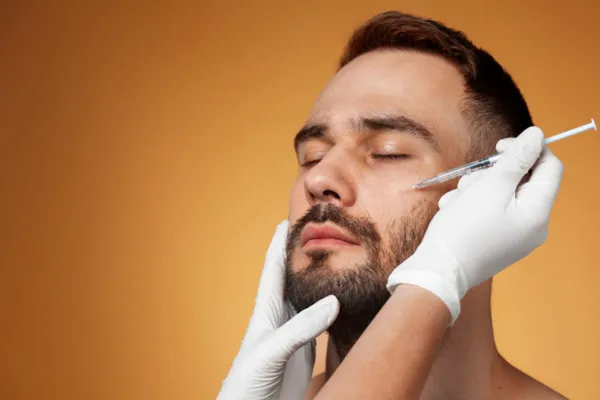
If you’ve ever wished your beard would fill in evenly or your brows could bounce back from years of over-plucking, you’re not alone. Demand for facial-hair transplants has surged in the last few years, no longer a niche fix for scars or burns, but a mainstream grooming choice. Clinics report big jumps in enquiries and procedures since 2020, with typical costs in the thousands depending on graft numbers.
What exactly is a beard/eyebrow transplant?
In simple terms, surgeons move tiny hair follicles from a donor area (usually the back of your scalp; sometimes around the ear for brows) and plant them where you want more density your beard lines, moustache, sideburns, or eyebrows. Most modern procedures use FUE (Follicular Unit Excision), placing single hairs at the right angle and direction to mimic natural growth. For brows, single-hair grafts are key, and a recent series placed roughly 290–310 hairs per eyebrow to achieve natural results.
A quick note on donors
- Periauricular (around-the-ear) hairs for eyebrows are gaining traction and can blend very well in the brow, useful when scalp hair is too thick.
- Beard & body hair can also be harvested via FUE when needed; newer series report low transection (damage) rates and high surgeon/patient favourability when done by experts.
Who’s a good candidate?
- Patchy or thin beards, sparse or misshapen brows, or hair loss after trauma/scarring.
- You’ll need adequate donor hair and realistic goals. For certain inflammatory conditions (e.g., alopecia areata), transplants are usually not recommended; stability matters for scarring conditions, and ongoing medical therapy may still be required.
What results feel like in real life
- Timeline: New hairs typically shed in the first weeks and begin growing from around 3 months, with fuller results by 9–12 months.
- Brows keep growing: Because the donor is usually scalp hair, transplanted brow hairs grow longer and straighter, you’ll likely trim them every 1–2 weeks. (That’s normal and expected.)
Risks & recovery
Modern hair restoration has a low overall complication rate in large series, but it’s still surgery. Reported issues include temporary numbness, infection, bleeding that needs attention, and “shock loss” (temporary shedding) in donor/recipient areas. Choosing an experienced hair transplant surgeon and following aftercare reduce risks.
How many grafts might you need?
- Eyebrows: often ~300 grafts per brow (always customised to your face and brow design).
- Beards: highly variable; partial touch-ups can be a few hundred grafts, while fuller beards often run into the low thousands. (Your surgeon will map density, angles, and curl to keep it natural.)
Costs: what to expect
Private pricing varies with graft numbers, technique, and who’s doing the work. As a broad benchmark, hair transplants in the UK often range from ~£1,000 to £30,000, while in Turkey, hair transplant cost range from £1,000 to £10,000, depending on scale; facial-hair procedures usually sit in the lower-to-mid part of that band, with many UK based clinics quoting ~£3,500–£7,000 for larger beard work and less for brows case by case. Don’t choose on price alone; choose on people and premises.
Safety first: how to pick a clinic & surgeon
This bit matters most. In England, hair transplant surgery must be performed in a CQC-registered facility. You can (and should) check a clinic’s registration and inspection history. Surgeons must follow GMC cosmetic-interventions guidance (updated in Dec 2024) on consent, safety, and responsible advertising. Professional bodies like BAHRS also publish practical patient advice on what to ask and who should be doing your surgery.
Your pre-book checklist
- Look up the clinic on the CQC register and read its latest report.
- Check your surgeon’s GMC number and experience with facial-hair cases (not just scalps).
- Ask who will harvest/place grafts (the named doctor or delegated staff), and how many facial-hair procedures they perform each year.
- Confirm aftercare, emergency cover, and revision policies.
- Steer clear of hard sells or time-limited offers; it’s explicitly discouraged by regulators.
If you are willing to get done a hair transplant in Turkey, you must consider licenced/certified doctors and check for real customer reviews.
FAQs
- Do results last? Transplanted hairs keep the genetics of the donor site, so they’re generally permanent, but overall hair changes with age and any underlying condition should stay controlled.
- Is there a “best” technique—FUE, FUT, DHI? FUE dominates facial-hair work for minimal scarring and precise placement; some surgeons use implanter pens (often branded as DHI) for control. The “best” is what your surgeon does well on your anatomy.
- How long is downtime? Most people are back to desk duties within days; visible crusting settles in ~a week; avoid strenuous exercise until your surgeon okays it. (Follow your clinic’s aftercare plan.)
The bottom line
Beard and eyebrow transplants have moved from “rare fix” to everyday confidence-boosters, helped by better tools, better design, and smarter donor choices. If you’re considering it, put as much energy into choosing the right team and setting as you do into inspo photos. That’s where the real magic and safety lives.
Sources & further reading
- https://www.nhs.uk/tests-and-treatments/cosmetic-procedures/cosmetic-surgery/hair-transplant/
- https://pmc.ncbi.nlm.nih.gov/articles/PMC8719972/
- https://www.gmc-uk.org/-/media/documents/guidance-for-doctors-who-offer-cosmetic-interventions-210316-65254111.pdf
- https://www.jprasurg.com/article/S1748-6815%2824%2900558-8/fulltext
At Capilclinic, we’re trusted by thousands of patients in the UK and Europe as a leading Hair Transplant Clinic in Turkey and Spain, known for our expert doctors, advanced facilities, natural hairline results, and affordable all-inclusive packages. Reach out to our team today to start your transformation.