



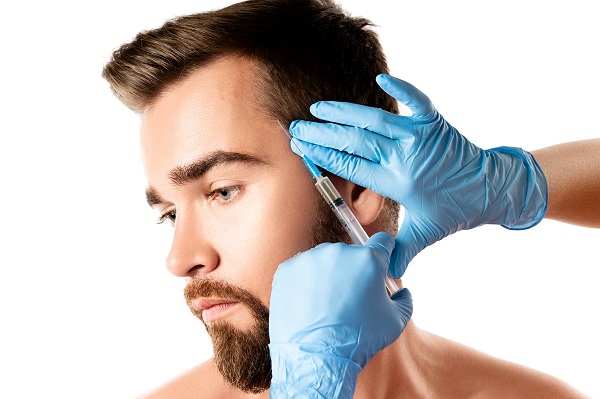
Hair care is a common concern for many people, as hair is not only a symbol of beauty, but also of health. In this context, hair mesotherapy has emerged as an innovative and effective solution to treat various hair problems. This treatment consists of the application of microinjections of vitamins, minerals and other nutrients directly into the scalp, with the aim of strengthening the hair follicles and promoting the growth of healthier and stronger hair.
Throughout this article, we will explore in detail what hair mesotherapy is, how it works, its benefits, and the considerations that should be taken into account before opting for this procedure. Hair mesotherapy not only promises to improve hair density and quality, but it also offers a less invasive alternative compared to other hair treatments.
Definition and Origin of Hair Mesotherapy
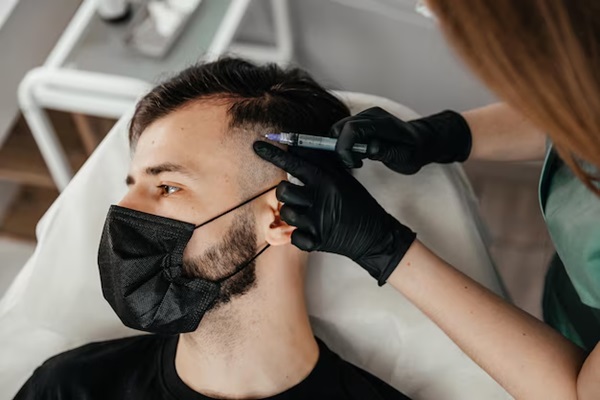
Hair mesotherapy is a medical-aesthetic treatment used to improve hair health and combat hair loss. This procedure consists of the application of microinjections into the scalp, which contain a mixture of vitamins, minerals, amino acids and other essential nutrients. These substances are selected specifically for each patient, with the aim of nourishing and revitalising the hair follicles, thus promoting the growth of stronger, healthier hair.
The origin of mesotherapy dates back to 1952, when French physician Michel Pistor developed this technique initially to treat pain and vascular diseases. Over time, mesotherapy has been adapted and expanded to other fields of medicine, including dermatology and aesthetic medicine. Today, hair mesotherapy is widely used to treat various hair conditions, such as androgenic alopecia, diffuse hair loss and thinning hair.
Hair mesotherapy has grown significantly in popularity due to its non-invasive approach and promising results. Unlike other hair treatments, hair mesotherapy acts directly on the scalp, delivering the necessary nutrients right where they are needed. This not only improves hair density and quality, but also helps to prevent hair loss and strengthen hair follicles.
When and How Is Hair Mesotherapy Used?
- Micro-injections into the scalp are a form of Hair Mesotherapy in which vitamins and minerals are injected directly into the scalp’s follicles to stimulate the growth and development of hair follicles.
- It is well-known that mesotherapy is quite efficient in treating hair and scalp problems. It is widely used in modern cosmetology to treat many hair issues.
- This treatment has several uses, including activating dormant bulbs and nourishing hair follicles. Mesotherapy is a hair restoration procedure that requires the expertise of a trained professional.
- Special medications comprising vitamins and nutrients required for healthy hair and good hair growth can be administered with the help of micro injections.
- The doctor selects a medication based on the patient’s condition. The cost of this operation is in line with what it will accomplish. Important: Many hair problems can be resolved with mesotherapy.
Why should I opt for mesotherapy:
Mesotherapy can be effective in solving the following issues;
- Extreme thinning
- The breakdown of the sebaceous glands that causes seborrhea on the scalp
- Dandruff
- Dry and scabbed-over hair
- Hair that is more brittle and prone to breakage
- a decrease in the volume of the basal area
Benefit
Hair mesotherapy offers a number of significant benefits to the health and appearance of the hair. One of the main benefits is the stimulation of hair growth. By injecting a mixture of essential nutrients directly into the scalp, blood circulation in the area is improved, which in turn promotes regeneration of the hair follicles. This results in stronger and thicker hair.
Another important benefit is the reduction of hair loss. Hair mesotherapy helps to neutralise excess dihydrotestosterone (DHT). A hormone that is closely related to androgenic alopecia, one of the most common causes of hair loss in men and women. By controlling DHT levels, hair loss can be slowed and hair thinning can be prevented.
In addition, this treatment is known to improve hair quality. The injected substances, which include vitamins, minerals and amino acids, deeply nourish the hair follicles, resulting in shinier, smoother and healthier hair. It has also been observed that hair mesotherapy can repair damaged hair fibres by increasing the production of keratin, a protein essential for hair structure.
Hair mesotherapy is a painless and minimally invasive procedure, making it an attractive option for those looking to improve the health of their hair without undergoing surgical treatments. Furthermore, as it is a personalised treatment, the substances injected are tailored to the specific needs of each patient, maximising results and minimising risks.
Features on mesotherapy
Patients can choose from a wide range of treatment options for their hair. Decisions are also influenced by the outcome of the application and financial constraints. While the effects of mesotherapy can be felt immediately, they do not last as long as we would like. In addition, because it is homeopathic (a treatment that aids hair in healing itself), the impact will take time to become apparent.
Mesotherapy Hair Treatments Using Allopathic Cocktails
Vitamins, minerals, elastin, collagen, and other active components are found in them. After a thorough examination of the patient’s hair and scalp, the doctor decides the best posture and desired outcomes. Important: The problem can be quickly solved with these cocktails.
Hair Mesotherapy with Homeopathic Cocktails
They are all natural, without oils or other chemical components, and contain just plant ingredients and an aqueous solution. Bulbs are stimulated, and the body’s inherent potential is reawakened due to this combination. You should not expect immediate effects from the initial surgery because the result is cumulative, like a snow globe. This type of mixture is ideal for patients concerned about the problem’s underlying cause and the aesthetics of their hair.
Application
Mesotherapy uses various tools to apply active chemicals to the skin. This therapy has a possible pain threshold, a particular application time, and possible adverse effects, even if they are pretty rare. When it comes to getting rid of unwanted fat, injections of mesotherapy combination are among the most common procedures. A tiny needle is required for these treatments; hence specialized syringes are needed. Important: Compared to other methods, injections are the least painful, but the procedure takes the longest. The patient complains of pain in the ears and the back of his head. This is a less traumatic approach.
What are the drawbacks of this procedure?
The most significant drawback of mesotherapy is the discomfort it causes, which outweighs its cost. However, everyone’s tolerance for pain is different. Injections are most painful in the occiput (back of the head) and the ear. For the first four days following mesotherapy, you should avoid washing your hair, going to the pool, or using the steam room. If you’re going through your menstrual cycle, it’s a good idea to take a break from the treatment. The patient’s tolerance for pain is a critical factor in determining whether or not the discomfort is felt.
Step-by-step procedure
The hair mesotherapy treatment is a relatively simple and quick process that is carried out in several sessions. The following is a step-by-step description of the procedure:
Initial Evaluation
Before beginning the treatment, the specialist performs a detailed evaluation of the patient’s scalp and hair condition. This assessment includes an analysis of hair density, the health of the hair follicles and the identification of the areas with the most hair loss. Based on this assessment, a determination is made as to whether hair mesotherapy is right for the patient and the nutrient mixture to be used is customised.
Preparation
Once the suitability of the treatment is confirmed, the scalp is cleaned and disinfected to avoid infection. In some cases, an anaesthetic cream may be applied to minimise any discomfort during the procedure. Next, the mesotherapy solution is prepared, which contains a combination of vitamins, minerals, amino acids and other essential nutrients tailored to the patient’s specific needs.
Delivery of Microinjections
The specialist uses a fine needle or a special injection device to administer multiple microinjections into the scalp. These injections are superficial and are applied strategically in the areas affected by hair loss or where hair density is to be improved. The injection process usually lasts between 20 and 30 minutes, depending on the size of the area to be treated.
Massage and Post-treatment
After the injections, the scalp is gently massaged to help evenly distribute the solution and improve absorption of the nutrients. The patient may experience slight redness or swelling in the treated area, but these effects usually disappear within a few hours.
Follow-up and Maintenance Sessions
Hair mesotherapy treatment usually requires several sessions for optimal results. Sessions are scheduled as often as once or twice a week for the first few months, and then spaced out as improvements are seen. The total number of sessions varies depending on the patient’s individual needs and response to treatment.
Possible Side Effects and Contraindications
Although hair mesotherapy is generally safe and minimally invasive, it is important to be aware of possible side effects and contraindications before undergoing treatment.
Common Side Effects
The most common side effects are usually mild and temporary. They include:
- Pain or discomfort in the treated area: You may experience mild discomfort or pain at the site of the injections, which usually disappears within a few hours.
- Redness and swelling: After treatment, the scalp may experience redness and swelling, which usually resolves within a day or two.
- Itching or irritation: Some people may experience itching or irritation in the treated area, but these symptoms are also temporary.
- Bruising: Rarely, small bruises may appear at the injection sites, which disappear within a few days.
Rare Side Effects
Although less common, more serious side effects may also occur:
- Infection: If hygiene measures are not properly followed, there is a small risk of infection at the injection site.
- Allergic reactions: Some people may be allergic to the components of the injected solution, which may cause allergic reactions.
Contraindications
Hair mesotherapy is not suitable for everyone. The main contraindications include:
- Allergies to the components: People with known allergies to any of the ingredients of the mesotherapy solution should avoid this treatment.
- Autoimmune diseases: Patients with autoimmune diseases may have an increased risk of adverse reactions.
- Pregnancy and breast-feeding: Hair mesotherapy is not recommended for pregnant or breast-feeding women due to lack of safety studies in these conditions.
- Uncontrolled diabetes: People with uncontrolled diabetes should avoid this treatment due to the risk of complications.
- Use of anticoagulants: Those taking anticoagulant medication should refrain from hair mesotherapy as it increases the risk of bruising and bleeding.
It is essential that anyone interested in hair mesotherapy consult with a specialist to assess their particular situation and determine if this treatment is right for them. A healthcare professional will be able to provide a comprehensive and personalised assessment. Ensuring that the risks are minimised and the benefits of the treatment are maximised.