



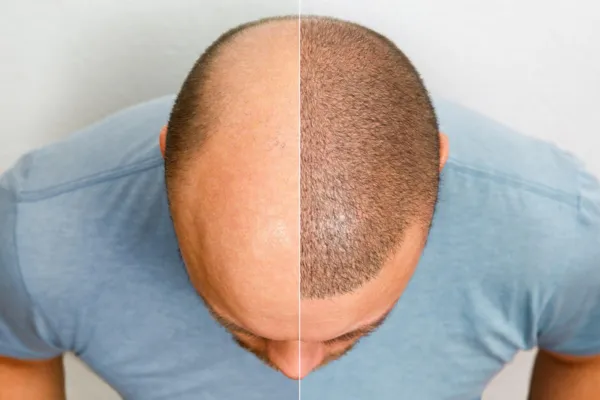
When planning a hair transplant, two terms come up repeatedly: density and coverage. They sound similar, but they describe different aspects of how your results will look. Understanding the difference between them is essential to choosing the right approach for your hair restoration.
What Does Density Mean?
Density refers to how many hairs (or follicular units) are placed within a specific area of the scalp. In simple terms, it’s the thickness of hair in a given zone. Imagine looking closely at a patch of hair: if it looks full and the scalp underneath is barely visible, that’s high density. If the scalp shows through easily, that’s lower density.
Hair density is often measured in grafts per square centimetre. However, it’s not just about the numbers. Factors such as hair thickness, colour contrast between hair and skin, and even how straight or curly the hair is can dramatically influence how dense it appears.
In most transplants, surgeons don’t recreate 100% of the natural density you once had. Instead, they aim for what’s called a cosmetic density, enough to make the hair look full and natural without overusing donor grafts.
What Is Coverage?
Coverage, on the other hand, refers to how much area of the scalp is restored with transplanted hair. For example, some patients focus only on rebuilding the hairline, while others want to fill the crown or cover the entire top of the head.
In other words, density determines how thick the hair looks within a specific region, and coverage determines how wide that region is. These two elements are linked, increasing one often means reducing the other.
Balancing Coverage and Density
Because donor hair is limited, most patients must strike a balance between density and coverage. The principle is simple:
- More coverage means lower density. If you try to spread grafts over a large area, each part will naturally receive fewer hairs.
- More density means less coverage. If you want a thick, dense result in one region, you may not have enough grafts to fill every other thinning area.
A skilled surgeon will design a strategy that makes the most of your donor hair, balancing these two factors based on your goals and long-term hair-loss pattern.
Understanding High, Medium, and Low Density
Although every scalp and donor supply is unique, density can generally be described in three levels:
- Low Density: Offers a natural, subtle improvement ideal for patients seeking light coverage or to fill mild thinning areas. The scalp may still be slightly visible in bright light, but the overall look is improved.
- Medium Density: Provides a fuller appearance and is suitable for most hair restoration goals. It gives a balanced result without exhausting the donor supply.
- High Density: Creates a rich, thick look similar to natural, youthful hair. This option uses more grafts in a smaller area and is best suited when donor availability allows or when a strong, defined hairline is desired.
The right density depends on your hair’s thickness, colour, and the contrast with your skin — for example, thick, wavy, dark hair on light skin looks fuller than thin, straight, light hair.
How to Choose the Right Strategy
When deciding on your transplant plan, several factors come into play:
- Donor Hair Availability: The back and sides of your scalp (the donor zone) contain a limited number of permanent hairs. Managing them carefully is key to achieving the best balance between coverage and density.
- Hair Characteristics: Thick, coarse, or curly hair provides better visual coverage, so you might achieve great results even with fewer grafts.
- Personal Goals: Decide whether your priority is to cover a large area lightly or to achieve high density in a smaller region like the front or hairline.
- Future Hair Loss: Hair loss often progresses over time. A well-planned transplant anticipates this and leaves room for potential future sessions.
- Natural Look: The goal is not just to add hair, but to recreate a natural appearance that blends seamlessly with your existing hair.
The Right Balance for You
Every patient’s journey is unique. Some prefer to start with moderate density and expand coverage later, while others focus on achieving strong density in the most visible areas first. What matters most is creating a long-term plan that suits your needs, lifestyle, and expectations.
At CapilClinic, we specialize in helping patients find that balance combining expert design, precision graft placement, and advanced techniques to deliver results that look natural and last. Whether you’re exploring your first procedure or refining previous work, a professional consultation can help you determine whether higher density or wider coverage is the right choice for you.
If you’re considering a hair transplant in Turkey, understanding the relationship between density and coverage is the first step to achieving the results you want, full, natural, and confidently yours.
At Capilclinic, we’re trusted by thousands of patients in the UK and Europe as a leading Hair Transplant Clinic in Turkey and Spain, known for our expert doctors, advanced facilities, natural hairline results, and affordable all-inclusive packages. Reach out to our team today to start your transformation.