




When a person has alopecia areata, sometimes known as just “alopecia,” their immune system attacks their hair follicles, resulting in inflammation and hair thinning. The National Institutes of Health claims that hair won’t regrow as long as a person’s immune system keeps attacking its hair follicles. However, there are some drugs, such as Baricitinib pills, that are investigated and approved to fight alopecia.
Many people with alopecia areata have hair loss in small, quarter-sized circular areas. People with this condition are often healthy and show no other symptoms until their hair loss starts, which usually happens unexpectedly. Some people will continue to see hair development, whereas others will see more bald patches appear or smaller bald patches combine to form larger balding areas. Here is where Baricitinib pills come in.
What are Baricitinib Pills for?

Baricitinib is an oral medication that has been approved for the treatment of certain autoimmune and inflammatory conditions. It is classified as a Janus kinase (JAK) inhibitor, which means it works by blocking the activity of enzymes called JAKs. These enzymes are key in the inflammatory response and immune system signaling.
By inhibiting JAK activity, Baricitinib can help reduce inflammation and modulate the overactive immune responses that drive conditions like rheumatoid arthritis, atopic dermatitis, and alopecia areata. It’s believed to be particularly effective at targeting the JAK1 and JAK2 isoforms.
Which are the approved uses for Baricitinib pills?
In addition to being an excellent solution for hair treatment, Baricitinib also helps patients suffering from some of the diseases mentioned below. It works by binding to and blocking the ATP-binding site of JAK enzymes, preventing them from transmitting inflammatory signals within cells. This can help interrupt the cycle of immune overactivation and reduce symptoms for patients dealing with autoimmune or inflammatory disorders like the following:
Rheumatoid Arthritis
- Authorities approve Baricitinib to treat moderately to severely active rheumatoid arthritis in adult patients.
- Patients can use it alone or combine it with other disease-modifying antirheumatic drugs (DMARDs) like methotrexate.
- Baricitinib reduces rheumatoid arthritis symptoms, including joint pain, swelling, and stiffness.
Atopic Dermatitis (Eczema)
- Baricitinib treats moderate-to-severe atopic dermatitis in adults and children aged 2 years and older.
- It controls the inflammatory response and improves the skin manifestations of this chronic inflammatory condition.
Alopecia Areata
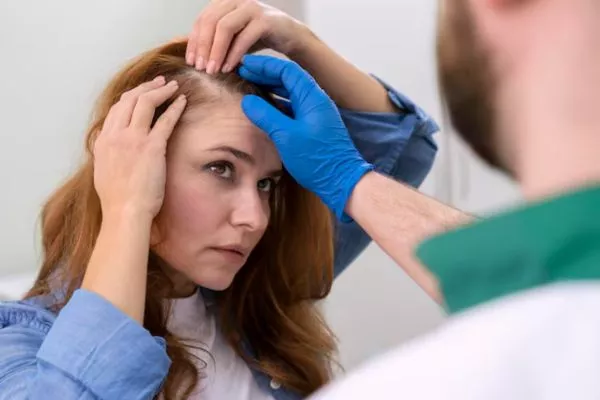
- More recently, Baricitinib has been approved for treating severe alopecia areata, an autoimmune condition that leads to hair loss.
- It is the first and only FDA-approved oral treatment for this condition.
How do Baricitinib pills treat Alopecia?
The JAK enzymes play a vital role in the inflammatory and immune signaling pathways that contribute to the autoimmune attack on hair follicles in alopecia. By inhibiting the activity of JAK1 and JAK2 enzymes, Baricitinib can help disrupt these damaging pathways.
When taken orally, Baricitinib can penetrate systemically and modulate the overactive immune responses that drive hair loss in alopecia areata. This can help:
- Calm the autoimmune attack on hair follicles.
- Reduce inflammation around the follicles.
- Promote hair regrowth and restoration of regular hair cycles.
Patients taking the medication have experienced significant improvements, with many seeing hair regrowth within the first few months of treatment. Of course, as with any medication, there are potential side effects that need to be carefully monitored by a healthcare provider. But for patients struggling with the devastating impact of alopecia areata, Baricitinib offers a promising new treatment option.
Common adverse reactions to Baricitinib
Like any medication, Baricitinib may cause side effects in some patients. Patients should remain informed about potential reactions and consult their healthcare provider. When prescribed for severe alopecia areata, Baricitinib commonly causes the following side effects:
- Upper respiratory tract infections: Patients taking baricitinib may experience more frequent colds, sinus infections, or other upper respiratory tract infections. Vigilant monitoring for signs of infection is important.
- Headaches:Headaches are a relatively common adverse reaction reported by patients using Baricitinib for alopecia areata.
- Acne:Some patients may develop new or worsening acne breakouts during Baricitinib treatment.
- Increased cholesterol levels: Like with other uses of Baricitinib, there is a risk of elevated LDL cholesterol and triglycerides that requires periodic monitoring.
- Nausea and gastrointestinal issues:Digestive side effects such as nausea, vomiting, diarrhea, or abdominal pain have been reported by some patients.
- Increased risk of blood clots: Though rare, Baricitinib carries a potential increased risk of deep vein thrombosis or pulmonary embolism that needs to be closely watched.

When considering initiating baricitinib for AA, each patient should discuss their particular risk factors, personal and family medical histories, and medical history with their doctor.
What happens if I mix baricitinib with other drugs?
Baricitinib and some drugs can indeed interact. Probenecid, a gout medicine, may interact with baricitinib. Due to this interaction, the body may have more significant amounts of baricitinib, which could increase the number of negative effects. The baricitinib dosage might need to be decreased if you keep taking probenecid.
Due to the lack of research on these combos, baricitinib shouldn’t be taken with many conventional JAK inhibitors or biological disease-modifying antirheumatic medications (DMARDs). There may be other medication interactions. This includes but is not limited to, gemfibrozil (Lopid), teriflunomide (Aubagio), and other drugs.
IMPORTANT: Before beginning baricitinib therapy, inform your doctor, pharmacist, and other healthcare professionals of the prescriptions and over-the-counter substances you already use.
How to take Baricitinib pills?
Before taking baricitinib, carefully read the Medication Guide provided by your pharmacist with every refill. If you have any questions, consult your physician or pharmacist to clarify any doubts. Additionally, take this medicine by mouth once daily, with or without food, as directed by your doctor.
If swallowing the tablet is difficult, you can dissolve it in two teaspoons (10 ml) of room-temperature water. After gently stirring the solution, drink it immediately to ensure proper intake. Furthermore, rinse the container with an additional two teaspoons of water and drink the liquid to consume the entire dose.

Your dosage, however, depends on factors like your medical history, response to treatment, and other medications you may be taking. Therefore, inform your doctor and pharmacist about all your products, including over-the-counter drugs, prescriptions, and herbal remedies.
To maximize the benefits, take this medication consistently at the same time each day. Moreover, follow your doctor’s instructions carefully and avoid altering the dosage or frequency. Doing so won’t speed up improvement; instead, it may increase the risk of side effects. Finally, notify your doctor promptly if your condition does not improve or worsens.
Differences between Baricitinib pills and other treatments
Topical treatments, such as minoxidil and corticosteroids, are standard options for alopecia. However, their effectiveness varies and often requires consistent application over months. Like diphenylcyclopropenone (DPCP), immunotherapy can trigger allergic reactions to stimulate hair regrowth. Still, it demands regular clinic visits and may not work for all patients.
In contrast, Baricitinib offers a convenient oral option. Unlike topical solutions, it works systematically to address the autoimmune causes of alopecia. Moreover, its once-daily administration simplifies treatment for patients seeking less time-intensive options. This benefit and promising hair regrowth results make Baricitinib a significant advance in alopecia care.
Comparison with other treatments

Baricitinib’s efficacy compares favorably to other established treatments for alopecia areata:
- Topical corticosteroids:While effective for localized patches of hair loss, topical corticosteroids are less effective for extensive alopecia. They also carry the risk of skin atrophy with long-term use.
- Intralesional corticosteroid injections:These injections can be effective for localized patches, but they are impractical for widespread hair loss and can cause pain and local skin changes.
- Minoxidil:Minoxidil is a topical solution that can promote hair growth, but its efficacy in alopecia areata is limited, and it primarily targets vellus hair (fine, unpigmented hair) rather than terminal hair (thicker, pigmented hair).
- Other JAK Inhibitors (e.g., Tofacitinib, Ruxolitinib):Other JAK inhibitors have also shown promise in treating alopecia areata. Still, baricitinib has the advantage of being specifically approved for this indication by regulatory agencies like the FDA and EMA, with robust clinical trial data supporting its use. Furthermore, the oral formulation of baricitinib offers convenience compared to topical applications.
Faq’s
How does Baricitinib treat alopecia areata?
Baricitinib is a medication that works by dampening the excessive activity of the immune system, which erroneously targets and harms hair follicles in individuals suffering from alopecia areata. By mitigating this overactive immune response, Baricitinib facilitates the healing process and encourages the regrowth of hair, helping patients reclaim their hair density and overall confidence.
How long does it take to see results?
Many patients begin to observe positive changes in their condition within a span of six months. However, it’s important to note that the rate of improvement can differ significantly from person to person, influenced by various individual factors.
Is Baricitinib FDA-approved for alopecia?
Yes. In 2022, the U.S. Food and Drug Administration (FDA) granted approval for Baricitinib, recognizing its efficacy in treating severe alopecia areata. Compelling results from extensive clinical trials bolstered this decision, demonstrating the medication’s ability to promote hair regrowth and improve the overall condition of individuals facing this challenging autoimmune disorder.
Conclusion
Baricitinib represents a significant advancement in the treatment of alopecia areata, offering hope to patients grappling with this challenging autoimmune condition. By targeting the underlying immune response that damages hair follicles, Baricitinib facilitates hair regrowth and restores confidence in many individuals. Its oral administration and robust clinical backing make it a convenient and effective alternative to traditional therapies.
For patients, the journey toward managing alopecia often involves exploring multiple treatments, but Baricitinib’s targeted approach offers a promising path forward. By working closely with healthcare providers, patients can reclaim not only their hair but also a sense of normalcy and self-assurance.
At Capilclinic, we’re trusted by thousands of patients in the UK and Europe as a leading Hair Transplant Clinic in Turkey and Spain, known for our expert doctors, advanced facilities, natural hairline results, and affordable all-inclusive packages. Reach out to our team today to start your transformation.