



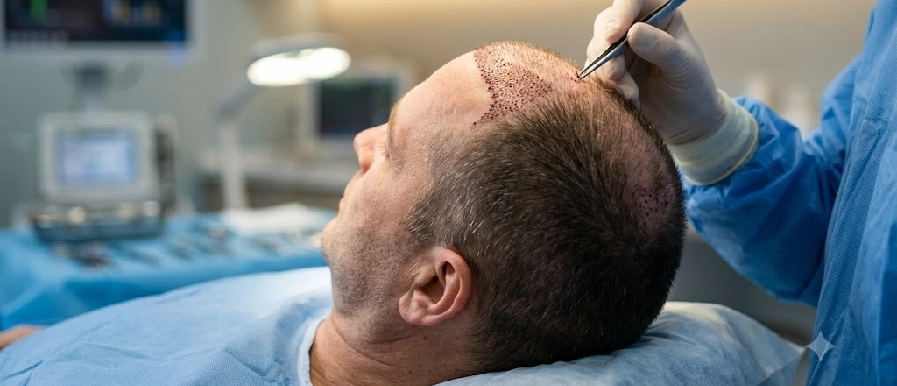
Yes, many patients can have a second hair transplant. A repeat procedure may increase density, treat new areas of thinning, restore the crown, refine the hairline, or improve an unsatisfactory first result. Eligibility depends on the remaining donor hair, scalp health, progression of hair loss, previous graft placement, and realistic expectations.
A second hair transplant requires careful planning because donor follicles are limited. Once follicles are extracted, they do not grow back in their original positions. The aim is therefore not to remove the highest possible number of grafts, but to use the available donor supply strategically while maintaining a natural-looking donor area.
Why Might You Need a Second Hair Transplant?
Some patients plan restoration in stages, treating the frontal hairline first and the mid-scalp or crown later. Others experience continued loss of non-transplanted hair. A transplant moves selected follicles, but it does not stop progressive pattern hair loss from affecting surrounding native hair.
A second procedure may also address low density, uneven coverage, poor symmetry, visible gaps, or an unnatural hairline.
Common reasons for considering another procedure include:
- Adding density to an area treated previously
- Restoring the crown or mid-scalp
- Treating new thinning caused by continued hair loss
- Improving an uneven or unnatural-looking hairline
- Filling visible gaps between existing grafts
- Completing a treatment planned in stages
- Correcting selected problems from an earlier procedure
CapilClinic notes that second procedures are commonly considered because hair loss has progressed, the first treatment was intentionally limited, or the patient wants greater density in selected areas.
How Long Should You Wait Before a Second Hair Transplant?
Most patients should wait at least 12 months before deciding whether another procedure is necessary. CapilClinic’s guidance on second hair transplants recommends waiting 12 months, and sometimes longer, so the first result and the healing of both treatment areas can be assessed properly.
Hair transplant results appear gradually. Temporary shedding can occur during the first weeks, while visible growth develops over several months. The American Academy of Dermatology states that most patients see results within six to nine months, although some require 12 months.
Judging the first procedure too early can lead to unnecessary graft placement or an inaccurate assessment of density. Patients with delayed growth, inflammation, significant scarring, or a repair case may need to wait longer.
The exact timing should be determined after a physical examination. Calendar time alone is not enough; the surgeon must also evaluate growth, healing, scalp condition, donor density, and continued hair loss.
Are You a Good Candidate for a Second Hair Transplant?
A specialist must determine whether another procedure can be carried out safely and whether it is likely to produce a meaningful improvement.
Adequate Donor Hair
The donor area, usually located at the back and sides of the scalp, must contain enough healthy follicles. The medical team should evaluate donor density, hair thickness, previous extraction patterns, scarring, and the overall condition of the scalp.
Donor hair is a finite resource. Aggressive harvesting may leave the donor area visibly thin or patchy and reduce future treatment options. When the supply is limited, the surgeon may prioritise the frontal area or another visually important zone instead of attempting complete coverage.
A patient who has already undergone one procedure may have fewer safely extractable follicles. This does not automatically prevent another transplant, but it makes accurate donor mapping and conservative planning especially important.
Stable and Diagnosed Hair Loss
The treatment plan should consider how hair loss may progress. If native hair is thinning rapidly, placing additional grafts without a long-term strategy may create an uneven appearance later.
A physician may discuss appropriate options to help preserve existing hair. An accurate diagnosis is important because not every type of hair loss is suitable for transplantation. The American Academy of Dermatology also notes that thinning can continue after surgery and that medical treatment may sometimes help patients preserve their existing hair.
A Healthy Scalp and Realistic Expectations
The donor and recipient areas should be fully healed before another operation. Persistent pain, redness, itching, inflammation, raised scars, or unusual shedding should be examined first.
A second transplant can improve coverage, but it cannot always recreate the density of an unaffected scalp. Results depend on the available grafts, treatment-area size, hair thickness, curl, colour contrast, hairstyle, and the amount of existing native hair.
Which Technique Can Be Used for a Second Hair Transplant?
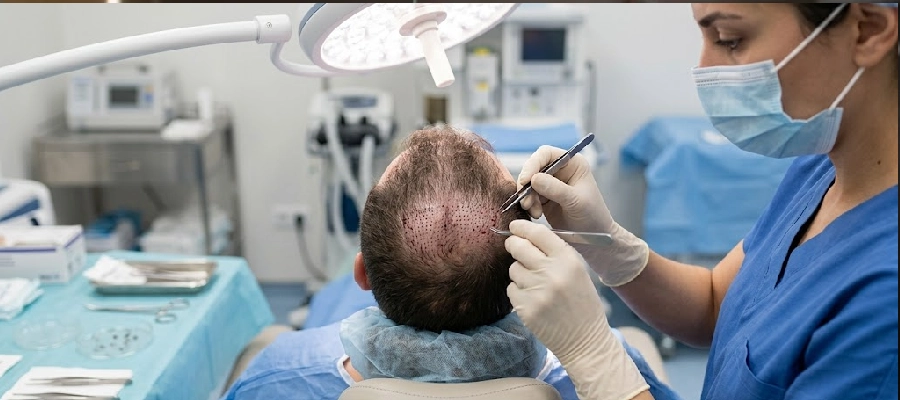
CapilClinic’s current hair transplant options include FUE, DHI and Sapphire Hair Transplant. The appropriate method for a repeat procedure depends on the donor area, existing grafts, treatment zone, required density, and the patient’s individual hair characteristics.
FUE for a Second Hair Transplant
FUE involves removing individual follicular units from the donor area with a small punch before implanting them into thinning or bald areas. During a second procedure, extractions must be distributed carefully around the sites used in the first operation.
FUE does not produce a long linear scar, but each extraction leaves a small circular mark. Removing too many follicles, particularly from one zone, can result in visible donor thinning. Donor mapping, controlled spacing, and conservative graft targets are therefore essential.
A second FUE procedure may be suitable when the donor area still has sufficient density and the first extraction pattern was distributed appropriately.
DHI for Additional Density
DHI uses an implanter pen to place extracted follicles while controlling their depth, angle, and direction. It may be suitable when precise placement is needed around existing hair or when additional density is required in a selected area.
CapilClinic explains that DHI treatment planning includes an examination of donor quality, scalp condition, existing density, hair texture, colour, and curl. These characteristics influence graft placement and the expected outcome.
DHI is not automatically the best option for every second procedure. Suitability depends on the required graft number, recipient-area condition, available donor capacity, and the overall medical plan.
Sapphire FUE for Repeat Procedures
Sapphire Hair Transplant uses FUE extraction followed by the creation of recipient channels with sapphire blades. This enables the medical team to plan the angle, direction, depth, and distribution of the transplanted follicles.
For a second procedure, Sapphire FUE may be considered when grafts need to be placed close to existing transplanted hair. The medical team must protect established follicles and confirm that the recipient area can safely support further implantation.
The choice between FUE, DHI, and Sapphire FUE should be based on medical suitability rather than the popularity of a particular technique.
How Many Grafts Are Needed for a Second Hair Transplant?
There is no standard graft number for a repeat procedure. A small hairline refinement may require far fewer grafts than crown restoration or extensive corrective work.
The graft estimate depends on:
- The size and location of the treatment area
- Existing native and transplanted hair density
- Remaining donor capacity
- Hair thickness, texture, and curl
- Previous extraction patterns
- Scarring in the donor or recipient area
- Expected progression of hair loss
- The desired balance between density and coverage
The largest possible session is not necessarily the best choice. Strategic placement of fewer grafts can sometimes create a stronger visual improvement while protecting the donor area.
For patients with limited donor hair, the priority may shift from complete coverage to improving the most visually important areas. CapilClinic similarly emphasises strategic and conservative donor use when the available supply is limited.
What Are the Risks of a Second Hair Transplant?
A repeat procedure carries potential risks such as swelling, redness, bleeding, infection, temporary numbness, scarring, poor graft growth, and an unsatisfactory appearance. The NHS states that hair transplantation is generally safe but, as with any operation, complications such as bleeding, infection, noticeable scarring, or unsuccessful graft growth can occur.
A second procedure presents additional challenges because the donor supply is smaller, previous extraction sites must be considered, and the recipient area may contain established grafts or scar tissue.
Poor planning may lead to:
- Donor-area overharvesting
- Damage to existing follicles
- Uneven recipient density
- Visible donor thinning
- Further scarring
- Limited options for future procedures
The International Society of Hair Restoration Surgery warns that poorly planned corrective work can worsen both donor and recipient areas. Surgery should not proceed when the available donor hair cannot reasonably support the patient’s goals.
What Happens During the Consultation?
A consultation for a second transplant should involve more than a graft quotation. The medical team should review the first operation, assess current hair loss, examine the donor area, and determine which zone should be prioritised.
Patients should provide the date and technique of the first surgery, the reported graft number, photographs, and available medical records.
The consultation should establish:
- How many safe donor grafts remain
- Whether native hair loss is still progressing
- Which area should be prioritised
- What level of improvement is realistic
- Which technique may be suitable
- How the remaining donor area will be protected
Only a qualified medical professional should make the final surgical recommendation after examining the patient.
Patients should be cautious of guaranteed density, “unlimited graft” promises, or plans made without a proper scalp and donor-area assessment.
How Can You Improve the Chance of a Good Result?
Choose an experienced medical team familiar with repeat and corrective procedures. Follow all preoperative and postoperative instructions, disclose medications and medical conditions, and attend scheduled follow-up appointments.
Ask to see before-and-after photographs of patients with similar hair-loss patterns and donor characteristics. Long-term donor management should remain the priority. A conservative plan is usually more sustainable than one that uses too many follicles early.
Patients should also follow their personalised aftercare programme. Protecting the grafts during the initial recovery period, washing the scalp correctly, avoiding unnecessary irritation, and attending follow-up assessments can support proper healing.
Frequently Asked Questions
Is a second hair transplant safe?
It can be safe for a suitable patient when planned and performed by qualified medical professionals. However, it remains a surgical procedure and carries risks such as infection, scarring, poor graft growth, and donor thinning.
Is a second hair transplant more difficult?
It may be more complex because the surgeon must work around previous extraction sites, existing grafts, possible scar tissue, and a reduced donor supply.
Can I have a second FUE hair transplant?
Yes, a second FUE procedure may be possible when enough donor density remains. Previous extraction patterns must be assessed carefully to reduce the risk of overharvesting and visible patchiness.
Can DHI be used for a second procedure?
DHI may be suitable when precise implantation is required around existing hair. The decision depends on the treatment area, graft requirement, donor capacity, and individual scalp characteristics.
Can Sapphire FUE be used for a repeat transplant?
Yes, it may be considered in suitable cases. The medical team must evaluate the donor supply and plan the new recipient channels without damaging established follicles.
Will a second transplant stop future hair loss?
No. Hair transplantation relocates selected follicles but does not stop the progressive thinning of non-transplanted hair. Long-term hair-loss management may still be recommended.
What if my donor area is too weak?
Further surgery may not be advisable if extraction would cause visible thinning or permanent damage. Alternatives may include medical management, partial restoration, scalp micropigmentation, or postponing surgery.
Can a second procedure repair a bad first result?
Some cases involving low density, gaps, asymmetry, or an unnatural hairline can be improved. Complete correction is not always possible, especially when donor hair is severely depleted or significant scarring is present.