




Tight ponytails, sleek braids, long extensions, sports helmets, religious head coverings these are all part of many people’s everyday lives. They can look great, feel practical, or be an important part of identity.
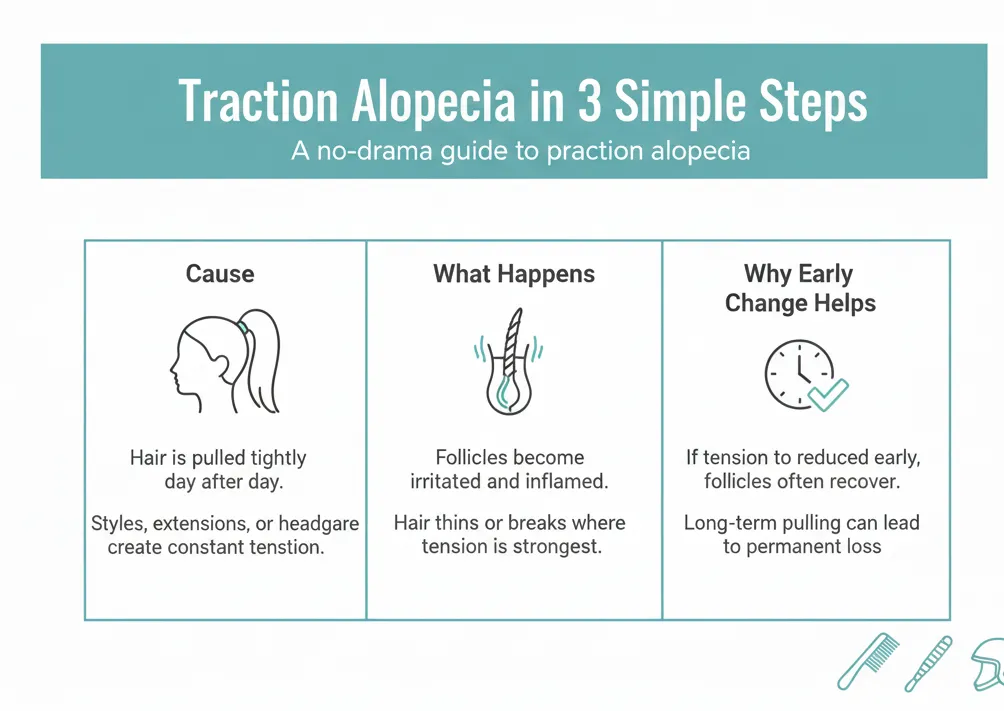
But when styles or headgear pull on the hair day after day, they can slowly damage the hair follicles. This type of hair loss is called traction alopecia.
This guide is a calm, no-drama look at how traction alopecia happens, how to spot it early, and simple, realistic ways to protect your hair without giving up every style you enjoy.
Understanding Traction Alopecia
What Is Traction Alopecia?
Traction alopecia is a form of hair loss caused by prolonged tension or pulling on the hair follicles.
When hair is pulled tightly for long periods:
- The hair shaft is constantly under strain.
- The follicle (the “root” under the skin) gets irritated and inflamed.
- Over time, the follicle can weaken and stop producing healthy hair.
Early on, this hair loss is often reversible if the pulling stops. If the tension continues for years, some follicles may become permanently damaged and the hair may not grow back in those areas.
Common symptoms and early signs include:
- Thinning or shorter hairs around the hairline, temples, or nape of the neck
- Small broken hairs that look “frizzy” or uneven in pulled-back styles
- Redness, irritation, or bumps where the hairstyle pulls the most
- Tenderness, burning, or soreness of the scalp after removing styles
- In later stages, visible patches of hair loss where the traction was strongest
Hairstyles and Practices That Can Contribute
Any style that keeps the hair pulled tight for long periods can contribute, for example:
- Very tight ponytails or buns, especially worn in the same position every day
- Tight braids and cornrows, particularly along the hairline
- Weaves, sew-ins, and extensions that are too heavy or tightly attached
- Tight headscarves, turbans, or wraps that pull on the hair
- Hairpieces or wigs attached with strong glue or clips in the same area repeatedly
The problem is not that these styles are “bad” in themselves, it’s the constant tension, lack of breaks, and sometimes poor installation techniques that cause damage.
Who Is at Risk?
Traction alopecia can affect anyone, but certain groups are more likely to experience it due to cultural, professional, or lifestyle habits.
People who may be at higher risk include:
- Those who regularly wear tight braids, cornrows, or slick ponytails
- People who use weaves or extensions very frequently, often without breaks
- Dancers, gymnasts, athletes, and military personnel, who keep hair tightly secured for practicality
- People who wear religious or cultural head coverings tied tightly or in the same way every day
- Individuals who frequently use tight headbands, caps, or helmets (e.g., cyclists, bikers, construction workers)
It’s important to emphasise: This is not about blaming any culture, profession, or style preference. The goal is awareness, so you can adapt your routine and protect your hair follicles, not abandon your identity or lifestyle.
Common Hairstyles and Their Impact
Overview of Tight Styles
Tight hairstyles are popular because they are:
- Neat and professional
- Practical for sports or work
- Stylish and versatile
However, when worn too tight or too often, they can stress the hairline and other vulnerable areas.
Examples:
- High or tight ponytails especially “snatched” styles that pull the hair back very firmly
- Tight buns (e.g., ballet bun, sleek work bun)
- Cornrows and tight braids, particularly when installed closely along the hairline or with added hair for volume
- Space buns, top knots, and half-up styles that use strong tension
Wearing these sometimes is usually fine. The risk increases when:
- They are worn every day
- The scalp feels sore or tender
- The style remains in place for many weeks without adjustment
The Role of Extensions
Hair extensions can add volume, length, and versatility but they also add weight and, depending on how they’re attached, extra tension.
Extensions that may contribute to traction alopecia if misused include:
- Sew-in weaves (especially if the base braids are very tight)
- Microlinks, microbeads, or bonds attached to small sections of hair
- Glue-in tracks or bonded wefts
- Clip-in extensions placed in the same spot daily
How extensions can cause traction:
- Tight braiding or strong bonds tug on a small group of hairs.
- The added weight of the extension pulls on the follicle with every movement.
- If extensions are left in too long or not installed correctly, they can cause ongoing tension and breakage.
This doesn’t mean you can never wear extensions. It means:
- Installation needs to be gentle and professional.
- The scalp needs breaks between sets.
- Any pain, soreness, or redness is a warning sign not something to “push through”.
Impact of Headgear
Headgear doesn’t pull the hair in the same way as a tight braid, but it can still affect hair health through pressure and friction.
Examples include:
- Helmets (motorbike, cycle, construction, sports)
- Tight hats or caps, especially worn for long periods
- Uniform headgear, worn in the same way daily
How headgear can affect the hair and scalp:
- Repeated pressure on the same areas can weaken hair over time.
- Constant friction from hats or helmet straps can cause irritation and breakage.
- If hair is tied tightly under a helmet, the tension + pressure together increase risk.
Again, the solution is not to stop wearing essential protective gear, but to adjust the fit, padding, and underlying hairstyle to minimise damage.
Prevention Strategies
Choosing the Right Hairstyles
You don’t need to give up all your favourite looks but small changes can make a big difference.
Tips for tension-friendly styling:
- Loosen the style slightly if your scalp feels tight or sore, it’s too tight.
- Alternate between up styles and down styles instead of keeping hair pulled back every day.
- Change the position of ponytails and buns (high one day, low the next) to avoid constant pressure in one spot.
- Choose larger, softer braids over very fine, tight braids along the hairline.
- Leave a few looser baby hairs or edges rather than pulling every hair back tightly.
A good rule of thumb: If you regularly feel relief when you take your hair down, your styles may be putting too much strain on your follicles.
You can also see our blog on hairstyles to avoid if you want more examples of looks that are kinder to your hairline.
Proper Maintenance of Extensions
If you enjoy extensions, you can reduce the risk of traction alopecia with some careful habits.
Safer use guidelines:
- Professional installation: Choose an experienced stylist who understands traction alopecia and avoids overly tight braids or bonds.
- Listen to your scalp: Extensions should not cause severe pain, headaches, or constant soreness. If they do, ask for adjustment or removal.
- Limit wear time: Don’t leave extensions in for longer than recommended by your stylist.
- Take breaks: Give your hair and scalp rest periods between extension sets, with gentle, low-tension styles.
- Avoid excessive weight: Very heavy or dense extensions put more pressure on the follicles.
- Gentle care:
- Use a soft, sulphate-free shampoo and avoid aggressive scrubbing.
- Support the hair at the roots when brushing to reduce pulling.
- Avoid tight styling on top of extensions (e.g., extra-tight ponytails over a sew-in).
If you’ve had a hair transplant, your surgeon may recommend avoiding or strictly limiting extensions in the transplanted area to protect the new grafts.
Protective Measures with Headgear
Helmets and head coverings are often non-negotiable for safety, work, or personal reasons. But you can still protect your hair and scalp.
Strategies to reduce damage:
- Ensure proper fit: A helmet that is too tight can create unnecessary pressure points.
- Use soft inner caps or silk/satin liners under helmets or hats to reduce friction.
- Avoid tying hair in very tight styles under the helmet opt for a lower, looser ponytail or braid where possible.
- For daily head coverings, try:
- Slightly looser wrapping techniques
- Varying the point of tension so the same hairs aren’t stressed every day
- Keep the scalp clean and dry sweat and friction together can irritate the skin and weaken hair.
Signs and Symptoms of Traction Alopecia
Being able to spot early signs is crucial, because early traction alopecia is often reversible.
Watch for:
- Thinning hair along the frontal hairline or temples
- Thinning at the nape of the neck, especially where braids or ponytails pull
- Short, broken hairs that don’t seem to grow past a certain length
- Scalp redness, bumps, or small pimple-like spots where hair is under tension
- Itching, burning, or tenderness, especially after removing a tight style
- More advanced: smooth patches of hair loss where the skin looks shiny or scarred
If you notice these signs, it’s a signal to change your hair practices quickly and give your scalp a break.
When to Seek Help
You should consider speaking to a dermatologist, trichologist, or hair specialist if:
- You see persistent thinning along the hairline or where styles pull the most
- You notice bald patches that don’t improve after loosening your styling habits
- The scalp is sore, inflamed, or scaly
- You have a history of long-term tight styling and are worried about permanent damage
A specialist can:
- Examine your scalp and hair follicles
- Confirm whether traction alopecia or another condition (like androgenetic alopecia, alopecia areata, or scalp disease) is present
- Recommend treatments, which may include:
- Changes in styling practices
- Medicated lotions or foams for the scalp
- Anti-inflammatory treatments
- In some cases of established, permanent hair loss, hair transplant surgery may be considered
At Capilclinic, our medical team regularly sees international patients including those from the UK and Europe who have hair loss linked to long-term tight styling or extensions. The first step is always a careful assessment of the scalp, hair care habits, and overall health, before discussing any treatment or surgical options.
Conclusion: Style Smart, Protect Your Follicles
You don’t need to abandon tight styles, extensions, or headgear forever. The key message is balance and awareness:
- Tension + time = risk the tighter and longer a style is worn, the more stress on the follicle.
- Early changes are often reversible if you act quickly and reduce tension.
- Simple adjustments, looser styles, regular breaks, gentler extensions, better headgear fit can make a big difference over the long term.
By listening to your scalp, rotating styles, and knowing when to ask for help, you can enjoy the looks you love while protecting your hair for the future.
If you’re worried about thinning edges, traction-related hair loss, or long-term damage from styling, the medical team at Capilclinic can review your case, discuss your styling habits, and guide you towards the safest next steps whether that’s non-surgical care, lifestyle changes, or exploring hair transplant options in appropriate cases.
Important Disclaimer
This blog is for information and education only. It is not a substitute for personal medical advice, diagnosis, or treatment.
If you notice sudden, severe, or worrying hair loss or scalp symptoms, please consult a qualified healthcare professional or hair specialist for an in-person assessment.
At Capilclinic, we’re trusted by thousands of patients in the UK and Europe as a leading Hair Transplant Clinic in Turkey and Spain, known for our expert doctors, advanced facilities, natural hairline results, and affordable all-inclusive packages. Reach out to our team today to start your transformation.