




A hair transplant with white hair is possible, and for many patients it can deliver results that look both natural and age-appropriate. The biggest misunderstanding around a hair transplant with white hair is the idea that white or grey strands are somehow too weak, too old, or too unsuitable to be transplanted. In reality, hair color itself is not what determines whether the procedure will work. What matters far more is the quality of the donor area, the stability of the hair loss pattern, the health of the scalp, and the overall surgical plan. Sources used by hair-restoration specialists consistently note that hair color does not significantly change graft survival, while broader clinical guidance emphasizes donor density, hair characteristics, and candidacy rather than pigment alone.
That said, white hair does bring a few practical differences. It may be harder for the surgical team or robotic systems to visualize during extraction and placement, and it can change how density is perceived because contrast between the hair and the scalp affects the visual illusion of fullness. In many cases, though, that lower contrast can actually help the final result appear softer and more natural, especially when the hairline is designed conservatively and the donor supply is managed well. So the short answer is yes, white hair can absolutely be transplanted, but the quality of the outcome depends on planning and technique, not on color alone.
Hair Transplant with White Hair: The Straight Answer
If you have white or grey hair and enough healthy donor follicles, you can usually have a hair transplant. Surgeons do not transplant “color”; they transplant living follicles from one part of your scalp to another. As long as those follicles are suitable and the pattern of hair loss makes sense for surgery, white hair is not a barrier in itself. Modern guidance on hair transplantation focuses on whether the scalp is healthy, whether the hair loss is stable, and whether the donor area can support long-term planning.
What often surprises patients is that white hair is sometimes cosmetically more forgiving than dark hair. Because there is usually less contrast between white hair and lighter scalp tones, the eye may notice less “show-through” in areas that are not packed with very high density. In simple terms, a patient with white hair may sometimes look acceptably full with fewer grafts than someone whose dark hair sharply contrasts against pale scalp skin. That does not mean white hair is always easier, but it does mean the final appearance can be quite elegant when the case is designed properly.
Why Hair Color Does Not Decide Success
The success of a transplant depends much more on follicle survival and donor characteristics than on pigment. Clinical references describe ideal candidates as people with stable, patterned hair loss, a healthy scalp, sufficient donor density, and realistic expectations. Hair caliber, curl, density, and scalp-to-hair contrast all influence how dense the result appears, but none of these factors turn white hair into a medical contraindication. In other words, white hair may change the strategy, but it does not cancel the option.
This distinction matters because many patients mix up “technical challenge” with “poor candidate.” White hair can be slightly more difficult to see during surgery, yet that is not the same as saying it grows worse after transplantation. A skilled team can adapt the method, the magnification, the lighting, and even the pre-op preparation to account for light-colored follicles. The follicles themselves do not become less transplantable simply because they no longer contain much pigment.
What Really Matters in White Hair Patients
When a surgeon evaluates someone with white hair, the conversation is usually about donor quality, not donor color. A strong donor zone at the back and sides of the scalp remains the foundation of modern hair restoration. The surgeon will look at density, miniaturization, hair shaft thickness, scalp condition, and the likely progression of future hair loss. If those elements are favorable, white hair is simply part of the case profile, not a reason to reject treatment.
Hair caliber is especially important. Thick or slightly coarse hair tends to create better visual coverage than very fine hair, regardless of color. Curl or wave can also improve the appearance of fullness because the hair occupies more visual space. This is one reason two patients with the same number of grafts can have very different-looking results. In white-haired patients, favorable thickness and texture can easily outweigh any concerns related to color.
Why White Hair Can Be More Challenging During Surgery
The main technical issue with white hair is visibility. White and very light hairs can be harder to distinguish from the scalp under certain lighting conditions, which can make extraction and graft handling more demanding. This is particularly relevant in robotic FUE, where some systems rely on visual recognition and may require temporary dyeing of very light or white hair so the machine can identify follicles more accurately. That detail does not make the surgery unsafe, but it does show why surgeon experience and the chosen method matter.
For manual FUE or FUT, an experienced team can still work effectively with white hair, but precision becomes even more important. The challenge is not that white grafts are weaker; it is that the team must see and handle them clearly throughout extraction, sorting, and placement. This is one reason patients with white hair should be especially careful about choosing a clinic that performs physician-led planning rather than treating the procedure like an assembly-line cosmetic service.
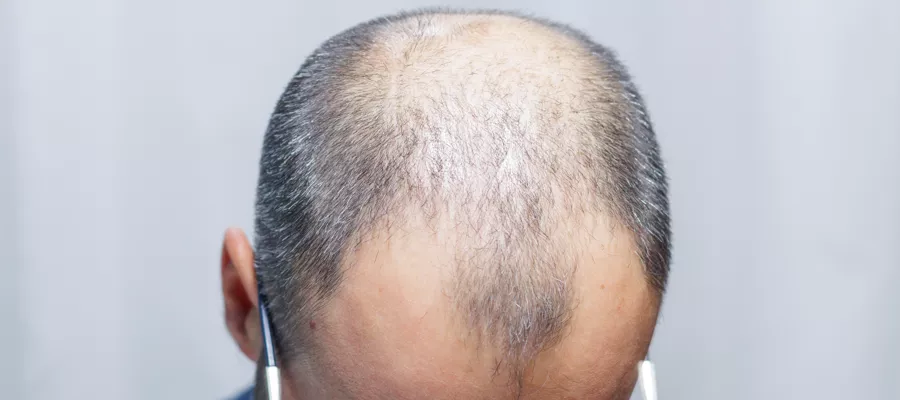
Will the Transplanted Hair Stay White?
Yes. In general, transplanted hair keeps the characteristics of the donor area. Hair transplantation is built on the principle often described as donor dominance, meaning the follicle largely retains its original traits after being moved. If the donor follicles are white or grey, the transplanted hair will grow as white or grey hair. A transplant can move hair, but it does not recolor it.
This is an important expectation point for patients whose donor area is significantly whiter than the hair they still have in the front, especially if they currently dye their hair. The new hair will need to blend with the rest of the hairstyle, and that may involve future color maintenance if the patient wants a uniform shade. On the other hand, many people prefer embracing their natural white hair, and in those cases the result can look very harmonious because the transplant restores framing and density without fighting the person’s age or natural appearance.
Does Age Matter More Than Hair Color?
Usually, yes. White hair often appears in older patients, but age alone is still less important than scalp health, donor reserve, and the pattern of ongoing hair loss. A younger patient with unstable, aggressive thinning may be a worse candidate than an older patient with a mature, stable pattern and solid donor density. Clinical guidance consistently places stability, healthy scalp tissue, and realistic expectations above cosmetic details such as color.
That is why the right question is not, “Am I too grey for a transplant?” The better question is, “Do I still have enough strong donor hair to support a long-term plan?” Once patients understand that, the discussion becomes more realistic. The surgeon is not trying to recreate teenage hair. The goal is to create a believable, sustainable result that will still look appropriate years later as native hair continues to age.
Can White Hair Sometimes Produce Better-Looking Coverage?
In some patients, yes. Lower contrast between hair and scalp can make thinning less obvious to the eye. This is one reason lighter hair colors are often described as more forgiving from a cosmetic perspective, even when the actual graft count is modest. The result may not always look dramatically dense up close, but it can look balanced and natural in normal daily life, which is what most patients really want.
Of course, this benefit depends on the entire picture. If the hair is extremely fine and the donor area is weak, white color alone will not rescue the case. A good outcome still depends on smart graft allocation, appropriate hairline design, and honest limits. But for suitable patients, white hair can actually help the transplant blend in more gracefully than people expect.
Who Is a Good Candidate for a Hair Transplant with White Hair?
A good candidate is someone with stable patterned hair loss, a healthy scalp, enough donor supply, and realistic goals about density. This applies whether the hair is black, brown, blonde, grey, or white. If the donor area is too weak, if the hair loss is still rapidly progressing, or if the scalp has an active disease process, surgery may not be the best first step. In those cases, the issue is not white hair itself but the broader biology of the case.
Women with white or grey thinning hair may also be candidates, but the evaluation can be more nuanced because female-pattern hair loss sometimes involves diffuse thinning that affects the donor zone as well. That is why a proper consultation matters. A surgeon needs to confirm where the safe donor hair actually is and whether redistribution will improve the overall picture rather than merely moving limited density from one visible area to another.
What Kind of Result Should You Expect?
The best results in white-haired patients usually look natural rather than aggressively dense. A mature, age-appropriate hairline, careful temple work, and even distribution often matter more than maximum graft packing. Patients who understand this tend to be happier, because the procedure is designed to restore framing, softness, and balance rather than create an unnaturally low or heavy hairline that fights the rest of the face.
It is also worth remembering that transplanted hair continues to behave like real hair. It can still age, grey further, change texture slightly, and require the same grooming decisions as the rest of your hair. A transplant is not a freeze-frame; it is a redistribution of living follicles that keep participating in the normal aging process.
Final Thoughts on White Hair and Hair Transplant Surgery
So, can you get a hair transplant with white hair? In most cases, yes. White hair does not prevent transplantation, and in some situations it can even help the final result look softer and more naturally blended. The real determinants are donor quality, scalp health, hair characteristics, surgical method, and the experience of the medical team.
The most important thing is not to self-reject because of color. Patients often assume they are “too grey” when the real answer is much more individualized. If the donor area is strong and the plan is realistic, white hair can absolutely be transplanted successfully. What changes is not whether the procedure can be done, but how carefully it should be designed.
Frequently Asked Questions
Does white hair make a hair transplant look thinner?
- White hair can sometimes appear less dense up close if the strands are very fine, but color alone is not what determines fullness. Hair caliber, curl, donor density, and placement strategy play bigger roles.
- In many patients, lower contrast between white hair and scalp actually helps the result look more natural and less “see-through” in everyday lighting.
- A strong design and realistic graft distribution matter far more than the fact that the hair is white.
Can white hair be dyed for the procedure?
- In some cases, yes. Very light or white hair may be temporarily dyed before robotic FUE so the system can visualize follicles more accurately.
- Whether dyeing is useful depends on the technique and the clinic’s workflow, so it should only be done under the surgeon’s instructions.
- After surgery, hair coloring should wait until the scalp has healed and your surgeon has cleared it, because post-op timelines vary by patient and clinic.
If my donor hair is white, will the transplanted hair also be white?
Yes. Transplanted follicles largely keep the characteristics of the donor zone. That means white donor hair will continue to grow as white hair after it is moved to the front or crown. A transplant can restore coverage and shape, but it does not change pigment. If color matching matters to you, that should be part of the planning conversation before surgery.
Can women with white or grey hair have a transplant too?
Yes, but candidacy has to be assessed carefully. Women can absolutely benefit from hair transplantation, yet diffuse thinning may reduce donor reliability in some cases. That is why surgeon-led diagnosis is essential. If the donor zone is stable and sufficient, white or grey hair is not a reason to rule the procedure out.