



Female ethical androgenetic alopecia is a common problem that affects women of all ages after puberty. This condition is characterized by progressive and diffuse hair loss, especially in the interparietal part of the scalp. Although it is not a serious disease, its impact on the self-esteem of affected women is significant. In this article, we will look at how spironolactone helps treat female alopecia. We will also discuss its effectiveness and safety.
In this context, spironolactone emerges as an interesting therapeutic option. What does spironolactone do?
It works by blocking the reception of androgens, such as testosterone. By doing so, you prevent these hormones from interfering with the hair growth cycle. Studies have shown that spironolactone can improve androgenic alopecia in 28% of cases.
Is It Possible to Treat Hair Loss with Spironolactone?
Doctors often prescribe spironolactone to help manage conditions related to the body’s retention of fluid. Such as heart failure and high blood pressure. On the other hand, experts frequently recommend it outside of its approved uses to manage alopecia.
This implies that even though spironolactone was not designed nor approved by the FDA to cure hair loss. It is still regarded as safe, and clinical studies have demonstrated that it does, in fact, effectively cure hair loss. It is within the authority of your healthcare practitioner or dermatologist to prescribe it for you off-label. If they believe it would be beneficial to do so.
This is encouraging information for women experiencing hair thinning or loss. Even while hair loss is prevalent (up to 38 percent of healthy women have some level of hair loss at some point in their lives). It can still be challenging for an individual’s self-esteem. Because of the potential for unwanted side effects in men, spironolactone is only licensed for females.
Mechanism of Action of Spironolactone in Female Alopecia
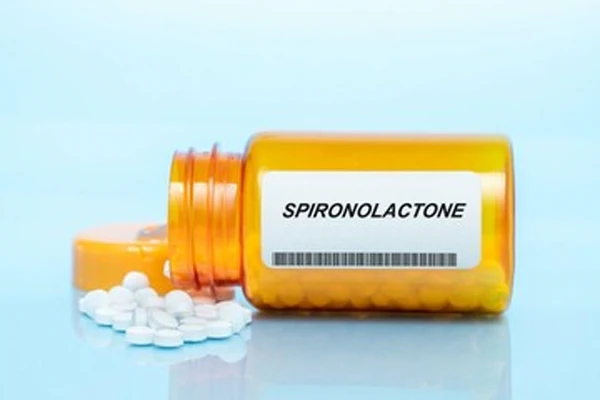
Spironolactone is a drug that has proven to be a valuable tool in the management of female ethical androgen alopecia. But how exactly does this drug work to improve hair health in women?
Blocking Androgen Reception
Spironolactone is responsible for blocking the reception of androgens, such as testosterone. These male hormones are implicated in hair loss in genetically predisposed people.
By interfering with the action of androgens, spironolactone prevents them from negatively affecting the hair growth cycle. In other words, it protects hair follicles from thinning and shedding1.
Effect on Androgenic Alopecia
Several studies have shown that spironolactone has significant efficacy in the treatment of female androgenic alopecia. On average, a 28% improvement in hair density is observed.
In addition, by slowing hair loss and stabilizing baldness, spironolactone can make a significant difference in the quality of life of affected women2.
Clinical Use and Considerations
Spironolactone is used in low doses to avoid unwanted side effects, such as potassium retention. It is especially useful in women with hyperandrogenism, such as those who have excess facial hair, acne or androgenic alopecia.
However, their use should be supervised by a doctor, and individual risks and benefits should be assessed. Spironolactone offers an interesting therapeutic option for treating female alopecia. Its specific mechanism of action and its effectiveness backed by scientific evidence make it a valuable tool in the fight against hair loss in women.
Considerations Regarding the Types of Hair
Although wide varieties of thinning hair may benefit. Women who are getting older and people whose genes make them more inclined to have hair loss. Are the ones most prone to see positive outcomes. As women age, they lose estrogen with time.
Female pattern hair thinning can be triggered by a propensity inherited from one’s parents. When there is no competition for the hormone testosterone in the follicles and body, this might cause the hair follicles to become smaller. And ultimately result in hair loss. Spironolactone is a medication that helps prevent hair loss by working against the effects of testosterone in the follicles.
When the body generates an abnormally high level of androgen or testosterone. Taking spironolactone may assist reduce hair loss by inhibiting testosterone’s impact on the body. The idea behind all this is that there will be less stimulation on the follicles caused by testosterone. Resulting in more hair retention.
What Other Applications?
Spironolactone is a drug known as a diuretic since it facilitates the excretion of excess salt and water from the body. Its primary application is treating medical conditions such as edema and water retention. Other situations it treats include:
- Heart failure
- Liver cirrhosis
- High blood pressure
- Kidney issues
In dermatology, spironolactone is also utilized for a variety of applications that are not explicitly approved for its usage like
How Exactly Does Treat Thinning Hair and Receding Hairlines?
Spironolactone works by competing with particular hormones and influencing the stability of the hormones in the body. Because it prevents the function of androgen hormones, it is effective in treating hair loss (which makes it an anti-androgen medication). Androgens are a kind of hormone that is vital to the control of hair growth, the maintenance of healthy hair follicles, and the creation of sebum.
High androgen concentrations are linked to various hair and skin problems, such as acne, hair loss, and hirsutism. Still, the specific nature of the interaction between hormones and hair growth in women is not entirely understood. It has been demonstrated that taking anti-androgen drugs can assist in managing these disorders.
Because of medical diseases such as polycystic ovarian syndrome, generally known as PCOS, some women have naturally high quantities of androgens in their bodies, or their androgen receptors are more responsive than average.
Is It Possible for Spironolactone to Lead to Hair Loss?
It is not known that spironolactone causes hair loss. However, it is used as a treatment for the condition. Spironolactone helps treat several illnesses, including polycystic ovary syndrome (PCOS), which can lead to hair loss or thinning.
Spironolactone inhibits the production of androgen hormones such as dihydrotestosterone and testosterone. It promotes healthy hair development on the scalp but also inhibits the growth of unwanted hair elsewhere, including on the body and face (hirsutism). Because of this, it can cure PCOS-related hair loss in addition to other PCOS symptoms, such as hirsutism.
Considerations regarding spironolactone, as well as its potential adverse effects
If you are considering using spironolactone as a treatment for your hair loss, there are a few things you need to think about first.
Long-Term Safety of Spironolactone in Dermatology
Spironolactone is a drug that has been shown to be safe and effective in various dermatological pathologies, including female ethical androgen alopecia. Here we explore their long-term security profile:
Security Profile
Spironolactone is a potassium-sparing diuretic with antiandrogenic properties. Although it was initially developed to treat hypertension and heart failure, its use in dermatology has grown due to its beneficial effects on the skin.
Indications in Dermatology
In addition to its role in treating female acne (where it can reduce the need for antibiotics and possibly isotretinin), spironolactone has also been used successfully in other skin conditions.
Two notable examples are hidradenitis suppurativa (a chronic inflammatory disease of the sweat glands) and female ethical androgen alopecia. In the latter, spironolactone can improve hair density in 28% of cases.
Long-term security
New evidence supports its use without the need for complementary testing in young women. Spironolactone is considered safe in prolonged treatment, as long as dosing guidelines are followed and side effects are monitored.
The most common adverse effects include frequent urination and breast tenderness due to its antiandrogenic action.
Is There a Hormonal Component to Your Hair Loss?
Since spironolactone is also an anti-androgen medication, it is used to help women whose hair thinning is brought on by hormonal issues, specifically androgenic ones. A straightforward blood test is all that is required to determine whether or not the levels of androgen in your body are abnormal. Spironolactone won’t assist you if your thinning hair results from something else, like stress.
At the very least, it takes that long to observe benefits. Most of the clinical studies that showed spironolactone could aid with hair thinning occurred over six months to twenty years. It is essential to have patience and reasonable expectations regarding the time frame in which you might hope to observe change.
Even though it has an excellent safety profile, spironolactone nevertheless has the potential to cause specific adverse effects in certain people. Breast pain and irregular menstruation are also symptoms of this condition, along with hyperkalemia (a high potassium level). It is also unsafe to use while pregnant; therefore, if you have not yet entered menopause, it is vital to utilize an effective method of birth control such as an intrauterine device (IUD).
Conclusion
It is common advice to initiate therapy for hair loss with a hair loss treatment that is applied topically. But if that isn’t enough, you should chat to your healthcare physician about whether or not adding spironolactone to the treatment plan for hair loss could be beneficial.
Female alopecia is a challenge that deeply affects the self-esteem and quality of life of those who suffer from it. Fortunately, medical and technological advances have expanded the treatment options available. In this context, spironolactone emerges as a promising option for women struggling with hair loss due to hormonal imbalances.