



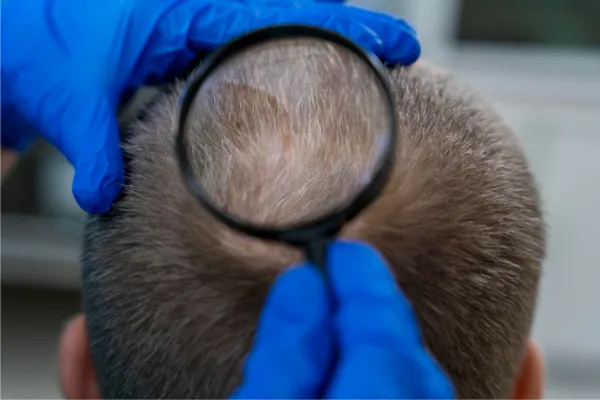
Scalp ringworm (medical name: tinea capitis) is a fungal infection of the scalp and hair. Despite the name, there’s no worm involved. It often shows up as itchy, scaly patches with areas of hair breakage that look like bald spots. It spreads easily, especially among toddlers and school-age kids.
Scalp ringworm is a dermatophyte fungus, not a yeast problem. Yeast can cause dandruff, but true ringworm usually needs prescription pills to cure. Anti-dandruff shampoos help reduce germs but don’t cure the infection by themselves.
What it looks like
- One or more round, scaly patches where hair has broken off at or near the scalp
- Black dots where hairs snapped off
- Itching, sometimes tender areas
- In some cases, swollen lumps (lymph nodes) in the neck/back of the head. A more severe form called a kerion can cause soft, pus-draining swellings and may lead to scarring and permanent hair loss if not treated promptly.
Kerion looks like a bacterial abscess but isn’t, it needs antifungal pills, not lancing. Delaying treatment can cause permanent scarring.
How it spreads
- Person to person: direct contact
- Objects: combs, brushes, hats, towels, bedding
- Animals: common in kittens and puppies; farm animals too. Because it spreads so easily, families and classrooms can see multiple cases.
Ringworm vs “yeast overgrowth”
People often mix these up.
- Scalp ringworm is caused by dermatophyte fungi that invade the hair shaft.
- Yeast (like Malassezia) causes dandruff/seborrheic dermatitis, which is different.
Anti-dandruff shampoos can help reduce spread of scalp fungi, but they don’t cure ringworm by themselves. You still need prescription pills for a true cure.
When to see a doctor
See your child’s doctor if you notice hair loss, scaling, or persistent itch on the scalp. Over-the-counter creams and powders won’t cure scalp ringworm. Early treatment prevents complications and limits spread.
Getting diagnosed
Doctors can often diagnose by examining the scalp. Sometimes they’ll send a hair/skin sample to the lab to confirm; results can take a couple of weeks to come back.
What actually treats it (and what doesn’t)
What works
- Prescription antifungal pills taken by mouth for about 6–12 weeks
- First choice: griseofulvin
- Alternatives: terbinafine or itraconazole, depending on the child and local guidance
- Medicated shampoo (e.g., selenium sulfide or ketoconazole) to lower contagiousness and help with scale while the pills do the curing
The exact fungus species matters, while Trichophyton often responds best to terbinafine, Microsporum tends to respond better to griseofulvin. If things aren’t improving, your doctor might check which type it is.
What doesn’t
- OTC creams/ointments for body ringworm don’t work for the scalp
- Shampoo alone won’t cure it
- Shaving the head isn’t necessary
Hair usually grows back after successful treatment.
Home care and stopping the spread
- Treat the patient fully: don’t stop pills early, even if patches look better.
- Shampoo plan: everyone in the household can use the antifungal shampoo 2–3 times/week for ~6 weeks to cut down spores.
- Don’t share combs, brushes, hats, pillowcases, towels.
- Clean combs/brushes: soak in half bleach / half water for 1 hour daily for the first 3 days after treatment starts.
- Laundry: wash towels in warm, soapy water; rinse and dry well.
- Pets: ask a vet to check cats/dogs if you suspect ringworm.
If there’s a pet in the home (especially kittens, puppies, or farm animals), have a vet check them for ringworm. Vacuum carpets, wash pet bedding, and clean surfaces to help stop re-infection. Screen close family members even if they don’t have symptoms as they can carry the fungus without itching.
School and activities
Your doctor will advise about school/daycare. Some children may need to stay home briefly when starting treatment; policies vary.
Quick FAQs
How long till it clears?
Most cases need 6+ weeks of pills; some need up to 3 months. Finish the course even if spots look better sooner.
Will the hair grow back?
Usually yes, once the infection is cured, unless there was a severe kerion with scarring.
Can adults get it?
Yes, but it’s much more common in kids.
Bottom line
Scalp ringworm is common and contagious, but very treatable. See a doctor, take the prescribed antifungal pills, use medicated shampoo to reduce spread, and follow hygiene steps at home. That combo cures the infection and protects the rest of the family.
Sources:
At Capilclinic, we’re trusted by thousands of patients in the UK and Europe as a leading Hair Transplant Clinic in Turkey and Spain, known for our expert doctors, advanced facilities, natural hairline results, and affordable all-inclusive packages. Reach out to our team today to start your transformation.